






What's Happening?
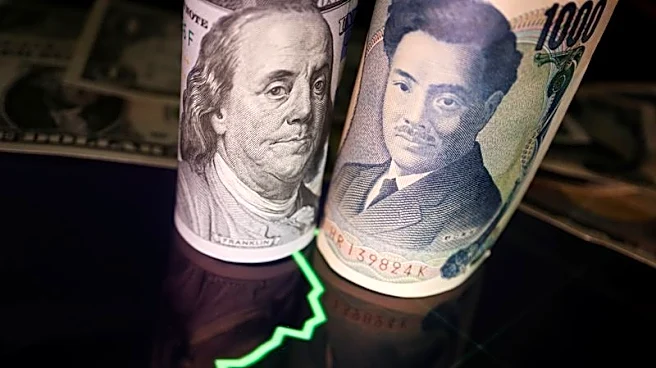
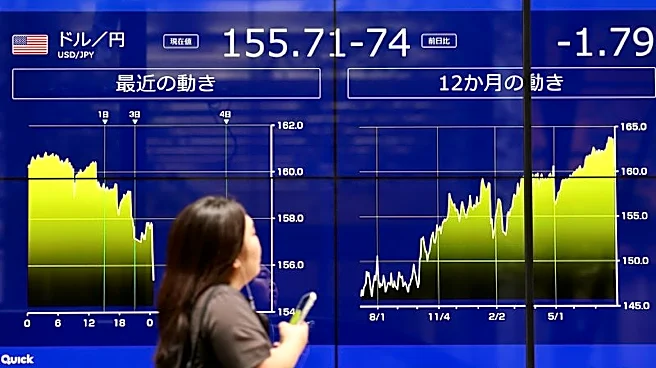
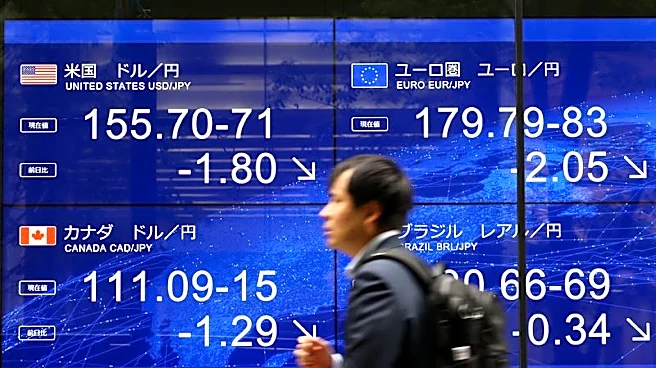
The U.S. dollar has weakened sharply against the Japanese yen after U.S. President Donald Trump and Japan's finance minister confirmed market intervention. The dollar, which was trading above 163 yen, fell below 160 yen following the intervention. This
move was aimed at addressing the yen's prolonged weakness, which has been a concern for Japan due to its impact on inflation and import costs. The intervention was a coordinated effort between the U.S. and Japan, marking a rare instance of such collaboration in currency markets.
Why It's Important?
The intervention in the currency markets highlights the strategic economic relationship between the U.S. and Japan. A weaker dollar can make U.S. goods more competitive in Japan, potentially boosting American exports. For Japan, strengthening the yen can help mitigate inflationary pressures caused by expensive imports. This development underscores the importance of international cooperation in managing currency fluctuations and their broader economic impacts. The intervention also signals a commitment to stabilizing the yen, which could have implications for global financial markets.
What's Next?
The Japanese finance ministry has indicated that it will continue to monitor the yen's movements and may take further action if necessary. This suggests that additional interventions could occur if the yen experiences excessive volatility. Market participants will likely keep a close watch on the yen's performance and any further statements from U.S. and Japanese officials. The outcome of this intervention could influence future currency policies and international economic relations.