







What's Happening?
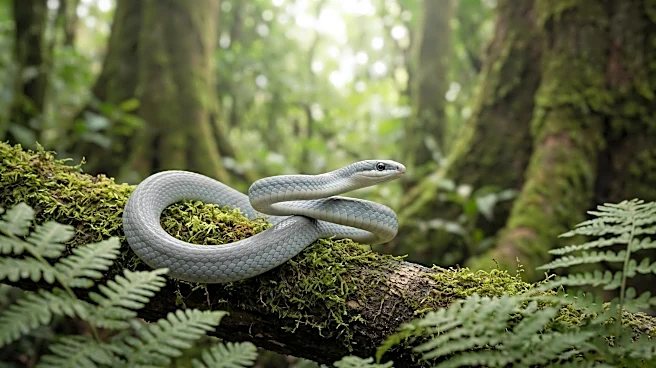
Researchers have identified a new snake species, named Dasypeltis albigularis or the white-throated egg eater, in Ethiopia's Harenna Forest. This discovery expands the known group of African egg-eating snakes, which are harmless to humans and exclusively
consume bird eggs. The new species was revealed in the journal Herpetozoa, with contributions from scientists in Germany and South Africa. Initially, researchers, including lead study researcher Arthur Tiutenko, believed they were dealing with an already known species. However, as the snake matured, morphological differences became apparent. The Harenna Forest snake, while outwardly resembling the montane egg eater (Dasypeltis atra), was confirmed as a distinct species through mitochondrial and nuclear DNA testing. Visible traits distinguishing Dasypeltis albigularis include light skin, sometimes with a bluish tint, between its scales, and a white throat and belly, which inspired its scientific name meaning 'white-throated' in Latin. A unique feature shared among this genus is modified vertebrae in the throat that facilitate breaking eggshells before swallowing.
Why It's Important?
The discovery of Dasypeltis albigularis is significant for several reasons. It contributes to the understanding of biodiversity, particularly within the Harenna Forest, one of the last major forested areas in the Horn of Africa. This region is a critical habitat, and the identification of new species underscores its ecological importance and the need for conservation efforts. From a scientific perspective, the finding highlights the challenges in species identification, especially for groups like egg-eating snakes where many members are morphologically similar. The reliance on DNA analysis and even hybrid breeding experiments, as detailed in the study, demonstrates the advanced techniques required for accurate classification. This research also enriches the field of herpetology by providing new insights into the evolutionary relationships and adaptations of these specialized egg-eating snakes. Understanding these species can offer clues about ecosystem health and the intricate food webs within their habitats.
What's Next?
Following the formal identification of Dasypeltis albigularis, further research will likely focus on understanding its specific ecological role, population size, and distribution within the Harenna Forest and potentially beyond. Scientists may conduct more extensive field studies to observe its behavior, breeding patterns, and interactions with other species. Conservationists will likely assess the conservation status of this new species and its habitat, potentially leading to recommendations for protective measures to ensure its survival. The discovery could also spur broader biodiversity surveys in the Harenna Forest and other similar regions in Africa, aiming to uncover more unknown species and better understand the continent's rich natural heritage. Additionally, the detailed genetic and morphological data collected for Dasypeltis albigularis will be valuable for comparative studies with other Dasypeltis species, refining the phylogenetic understanding of this fascinating group of snakes.
Beyond the Headlines
The discovery of the white-throated egg eater extends beyond mere scientific classification; it underscores the vast amount of undiscovered biodiversity that still exists, even in relatively well-studied regions. This finding serves as a powerful reminder of the ongoing need for biological exploration and research, particularly in threatened ecosystems like the Harenna Forest. Ethically, the identification of new species places a responsibility on humanity to protect these unique forms of life and their habitats. The specialized feeding mechanism of these snakes, involving modified vertebrae to break eggshells, highlights the incredible evolutionary adaptations that allow species to thrive in specific ecological niches. Culturally, such discoveries can inspire greater public interest in natural sciences and conservation, fostering a deeper appreciation for the complexity and fragility of the natural world. It also emphasizes the collaborative nature of modern scientific research, involving international teams and diverse methodologies to achieve groundbreaking results.