


What's Happening?
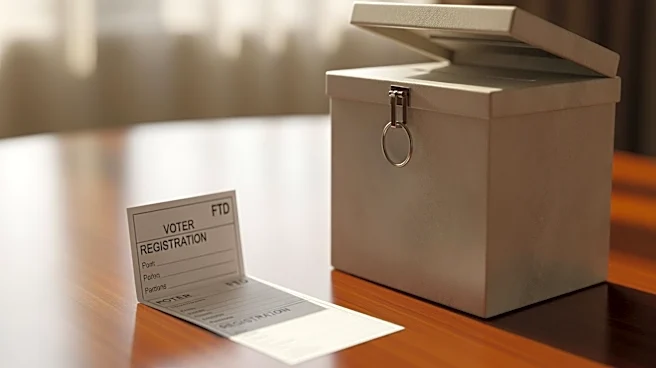
A new law in Utah, SB153, signed by Governor Spencer Cox, has made voter information public, leading to concerns among residents. The law classifies details such as name, address, party affiliation, and voter status as public unless the voter is considered
'at-risk.' At-risk individuals include victims of domestic violence, law enforcement officers, military members, public figures who have received threats, or those protected by court orders. The Utah Lieutenant Governor’s Office is working to clarify the law and address public concerns, as some voters are threatening to unregister to protect their privacy.
Why It's Important?
The public availability of voter information raises significant privacy concerns and could impact voter participation. If individuals feel their safety or privacy is compromised, they may choose not to register or vote, affecting voter turnout and the democratic process. This law could also set a precedent for other states considering similar measures, influencing national discussions on voter privacy and data protection. Stakeholders such as civil rights organizations, privacy advocates, and political parties are likely to engage in debates over the balance between transparency and privacy.
What's Next?
The Utah government may need to address the backlash by providing clearer guidelines and possibly amending the law to protect voter privacy. Public forums and discussions could be organized to gather feedback and propose solutions. Legal challenges or legislative amendments might be pursued by concerned groups. The outcome will be closely watched by other states and could influence future legislation on voter information transparency.