
What's Happening?
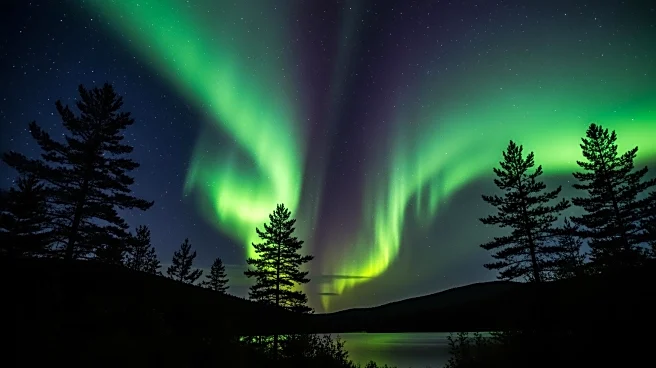
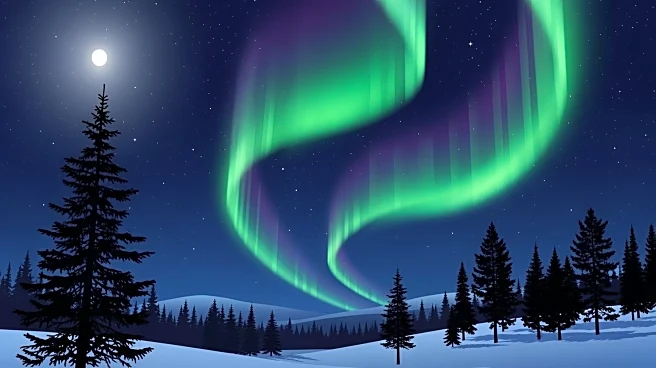
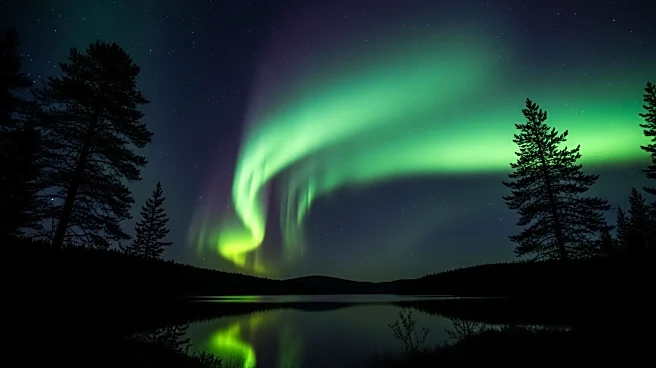
The National Oceanic and Atmospheric Administration (NOAA) has issued a geomagnetic storm warning for March 19, following a coronal mass ejection (CME) from the Sun on March 16. The storm is expected to reach G2 (moderate) levels, with a possibility of
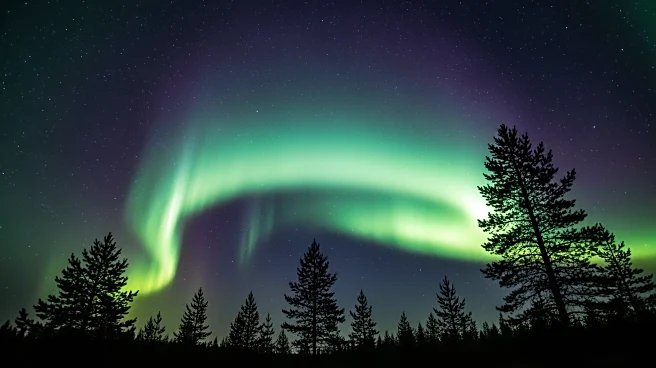
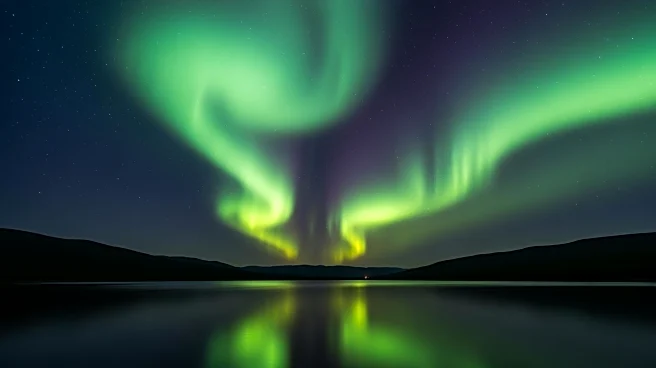
G3 (strong) conditions. This could result in the northern lights being visible across parts of the northern United States. The best viewing times are anticipated between 10 P.M. and 2 A.M. local time. States with a higher likelihood of seeing the auroras include Alaska, Washington, Idaho, Montana, North Dakota, South Dakota, Minnesota, Wisconsin, Michigan, and Maine. Other states may experience weaker displays if conditions intensify.
Why It's Important?
The visibility of the northern lights in the U.S. is a rare event that draws significant public interest and can boost local tourism in areas where the auroras are visible. The geomagnetic storm warning also highlights the ongoing impact of solar activity on Earth's magnetic field, which can affect satellite operations, power grids, and communication systems. Understanding and predicting these solar events are crucial for mitigating potential disruptions to technology and infrastructure.
What's Next?
As the geomagnetic storm approaches, NOAA and other space weather agencies will continue to monitor solar activity and provide updates on the storm's intensity and potential impacts. Local weather conditions will also play a role in determining visibility, and residents in affected areas may plan to observe the auroras if skies are clear. The event underscores the importance of continued research and investment in space weather prediction capabilities.