








What's Happening?
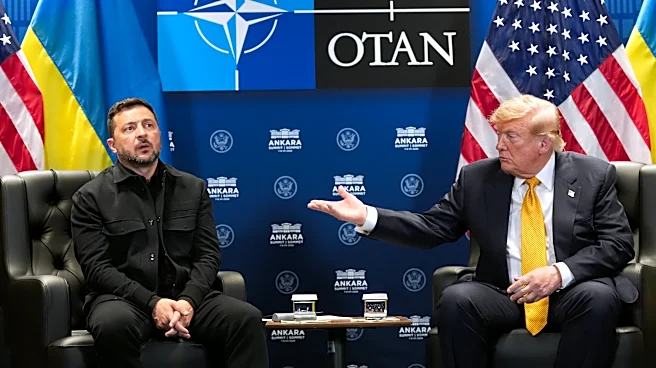
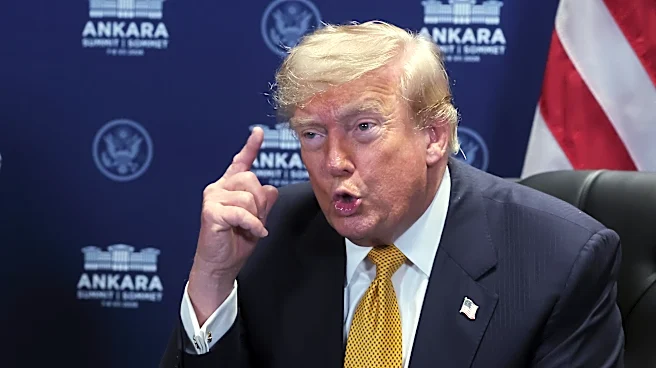
The Trump administration has expressed support for a draft bill imposing heavy tariffs on Russian oil, aiming to increase economic pressure on Moscow to end its war in Ukraine. The bipartisan bill, supported by Senators Lindsey Graham and Richard Blumenthal,
seeks to penalize countries purchasing Russian oil, with India and China being major buyers. The move is part of a broader strategy to leverage Ukraine's recent battlefield successes to bring Russian President Vladimir Putin to the negotiating table. The bill's approval by the White House signals a significant step in U.S. efforts to influence the conflict's outcome.
Why It's Important?
The proposed tariffs represent a strategic economic measure to weaken Russia's financial capacity to sustain its military operations in Ukraine. By targeting Russian oil exports, the U.S. aims to disrupt a critical revenue stream for Moscow, potentially forcing a recalibration of its military strategy. The bipartisan nature of the bill underscores a unified U.S. political stance against Russian aggression. The move could also impact global oil markets, influencing prices and trade dynamics, particularly for countries heavily reliant on Russian energy.
What's Next?
The bill's passage through Congress will be closely watched, with potential implications for U.S.-Russia relations and global energy markets. If enacted, the tariffs could prompt retaliatory measures from Russia or shifts in oil trade patterns. The international community, particularly countries like India and China, may need to reassess their energy procurement strategies. The U.S. Senate is expected to deliberate on the bill soon, with its outcome likely influencing future diplomatic engagements with Russia.