






What's Happening?
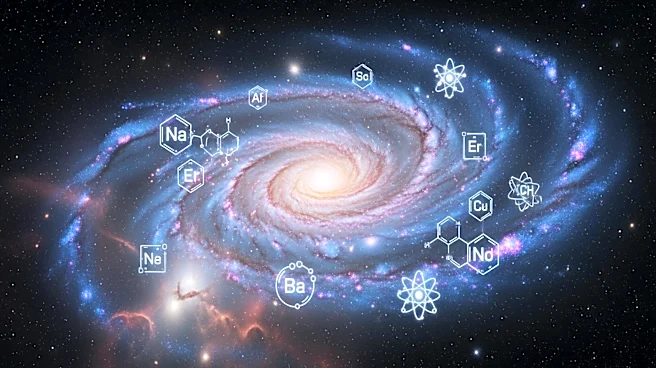
Astrophysicists have successfully reconstructed the detailed history of a spiral galaxy outside the Milky Way for the first time. By analyzing the chemical signatures of the galaxy's gas clouds and comparing them with computer models, researchers traced
the galaxy's formation and evolution over 12 billion years. The study focused on the galaxy NGC 1365, known as the Great Barred Spiral, using the Irénée du Pont telescope in Chile. The team mapped oxygen in thousands of star-forming clouds within the galaxy and compared these findings with approximately 20,000 simulated galaxies to identify the one that most closely matched NGC 1365. This allowed them to 'rewind' time and reconstruct its likely evolutionary path.
Why It's Important?
This study marks a significant advancement in the field of astrophysics, particularly in understanding galaxy formation and evolution. By applying the method of chemical archaeology outside the Milky Way with such detail, scientists can gain insights into the processes that shape galaxies. This research could help answer broader questions about whether the evolutionary path of NGC 1365 is typical for large spiral galaxies or unique. Understanding these processes is crucial for comprehending the history and future of our own Milky Way galaxy, potentially influencing future astronomical research and theories.
What's Next?
Further research is needed to clarify some details, such as the influence of gas flows and collisions on chemical signatures. Scientists aim to determine whether NGC 1365's trajectory is typical for large spiral galaxies and how its growth is influenced by external factors. These findings could lead to a deeper understanding of galaxy evolution and the role of chemical processes in shaping the universe.