



What's Happening?
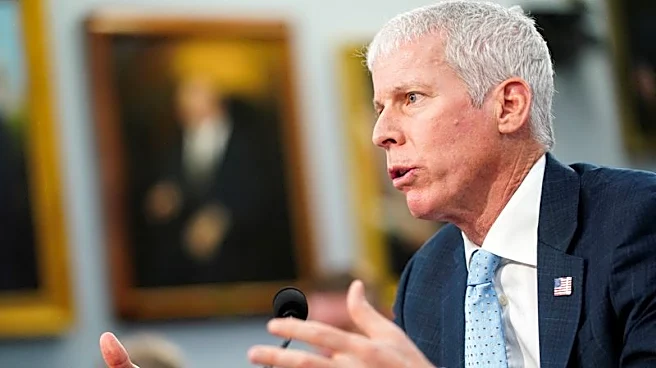
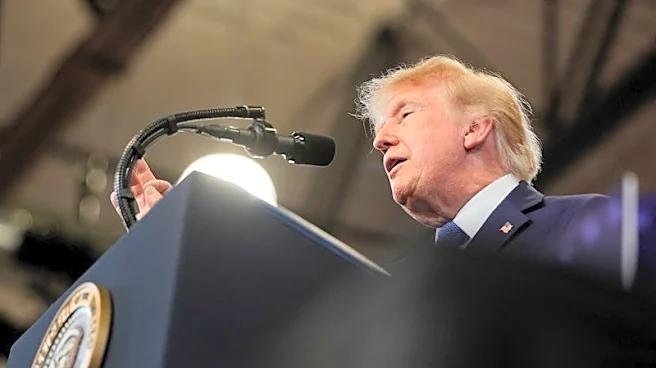
Larry Kudlow, a prominent economic commentator, argues that President Trump and the Republican Party possess a compelling economic message for the upcoming midterm elections, provided they effectively communicate it. Kudlow contends that President Trump's
'free enterprise capitalism' is driving a prosperous economy, which he hopes will be further bolstered by middle-class tax reform as part of the midterm package. He contrasts this with what he describes as Democratic policies, including 'Medicare for All,' substantial tax increases, a state-run economy, open borders, defunding the police and ICE, packing the Supreme Court, and ending the Senate, which he believes will be unpopular with 'real likely voters.' Kudlow dismisses early polls that suggest President Trump's unpopularity on issues like Iran or the economy, attributing their inaccuracies to surveying methods that include 'adults or registered voters' rather than 'likely voters' and often using 'loaded questions.' He cites Treasury Secretary Scott Bessent's reports of 105,000 hard goods producing jobs added this year and 93,400 factory construction jobs since President Trump took office as evidence of a manufacturing boom. Additionally, Kudlow highlights a nearly 5 percent increase in manufacturing wages this year, double the inflation rate, and a significant reduction in federal jobs coupled with an increase in private sector jobs.
Why It's Important?
Kudlow's analysis is significant as it outlines a potential economic narrative that the Republican Party and President Trump could leverage in the midterm elections. By emphasizing economic prosperity, job growth, and wage increases under President Trump's policies, the GOP aims to appeal to working-class voters and counter criticisms regarding affordability and inflation. The comparison with Democratic proposals serves to draw a clear ideological distinction, framing the election as a choice between 'free enterprise capitalism' and 'big-government socialism.' This strategy seeks to mobilize voters who prioritize economic growth and fiscal conservatism. The dismissal of early polls as unreliable underscores a broader political tactic to manage expectations and maintain confidence within the party base. If this economic message resonates with voters, it could significantly influence the outcome of the midterm elections, potentially shifting the balance of power in Congress and shaping future legislative agendas.
What's Next?
The coming months will likely see President Trump and Republican candidates actively campaigning on this economic platform, emphasizing job creation, wage growth, and tax reform. They will likely continue to draw sharp contrasts with Democratic proposals, particularly on issues related to government spending, taxation, and social programs. The effectiveness of this messaging will be tested as the midterm elections approach, with both parties vying to define the economic narrative. Economic indicators, such as inflation rates, employment figures, and wage growth, will be closely watched and debated by both sides. The Federal Reserve's actions, particularly regarding interest rates and inflation control, will also play a crucial role in shaping the economic environment leading up to the elections. The debate over 'middle-class tax reform' will likely become a central policy discussion, with details of any proposed changes being scrutinized by voters and economists alike.
Beyond the Headlines
Beyond the immediate electoral implications, Kudlow's argument touches on a fundamental ideological divide in American politics regarding the role of government in the economy. The emphasis on 'free enterprise capitalism' versus 'big-government socialism' reflects a long-standing debate about economic models and their impact on individual prosperity and national wealth. The discussion about the accuracy of polls also highlights a broader challenge in political discourse: how public opinion is measured, interpreted, and potentially manipulated. The focus on manufacturing jobs and wages speaks to the importance of industrial policy and the appeal to a specific segment of the working class. This narrative also implicitly addresses concerns about global trade and the reshoring of industries. The ongoing debate about affordability and inflation, despite claims of economic prosperity, underscores the complex and often contradictory perceptions of economic reality among different segments of the population, which will continue to shape political outcomes.