








What's Happening?
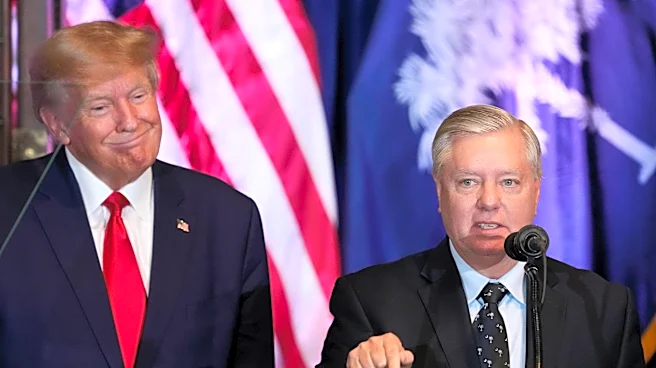
President Trump has directed that flags across the United States be flown at half-staff to honor Senator Lindsey Graham, who passed away at the age of 71. Graham, a prominent Republican from South Carolina and a close ally of President Trump, died from an aortic
dissection linked to arteriosclerotic cardiovascular disease. His death leaves a significant vacancy in the Senate, particularly affecting the Republican Party's foreign policy stance. Concurrently, the U.S. military launched airstrikes against approximately 140 targets in Iran, escalating tensions in the Middle East. This action was in retaliation for Iran's attack on a vessel in the Strait of Hormuz, threatening a fragile peace agreement established on June 17. In response, Iran has targeted U.S.-linked sites in several Middle Eastern countries.
Why It's Important?
The death of Senator Graham marks a pivotal moment in U.S. politics, as he was a key figure in shaping foreign policy and a staunch supporter of President Trump. His absence could lead to shifts in the Republican Party's approach to international relations. The military actions in Iran signify a significant escalation in regional hostilities, potentially destabilizing the Middle East further. This could impact global oil markets and international diplomatic relations, as the Strait of Hormuz is a critical passage for oil shipments. The situation underscores the fragile nature of peace agreements in the region and the potential for rapid escalation into broader conflict.
What's Next?
The U.S. Senate will need to address the vacancy left by Senator Graham, which could lead to a contentious appointment process. In the Middle East, the U.S. and Iran may face increased international pressure to de-escalate tensions and return to diplomatic negotiations. The global community will likely monitor the situation closely, as further military actions could have widespread economic and political repercussions.