






What's Happening?
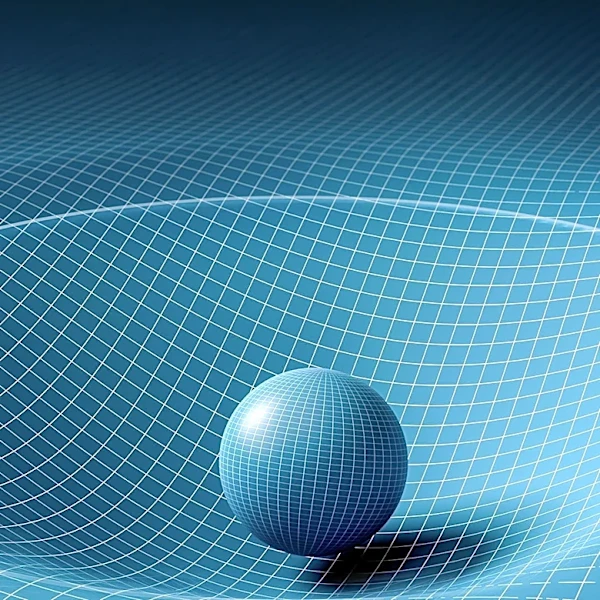
A study from the University of Sheffield suggests that dark matter and hypothetical particles known as dark photons may exist in a hidden fifth spatial dimension. This theory, published in Physical Review D, posits that dark matter's elusive nature is due
to its interaction with this extra dimension, which is inaccessible to ordinary matter. The research builds on the Kaluza-Klein framework, which has historically been used to unify physical forces. The study's lead author, Yu-Dai Tsai, and his team propose that the geometry of this fifth dimension could explain the mass alignment between dark matter particles and dark photons.
Why It's Important?
Understanding dark matter is crucial for comprehending the universe's structure and evolution, as it constitutes about 85% of the universe's mass. This new theory could provide a breakthrough in physics, offering insights into fundamental forces and the universe's composition. If validated, it could reshape scientific approaches to studying the cosmos and influence future research directions. The implications extend to astrophysics and cosmology, potentially leading to new technologies and methodologies for exploring space.
Beyond the Headlines
The introduction of a fifth dimension challenges existing paradigms in physics, prompting debates about the nature of reality and the limits of human perception. It raises philosophical questions about the universe's structure and our place within it. The theory also highlights the interplay between theoretical physics and experimental validation, as researchers seek empirical evidence to support or refute these ideas. This ongoing exploration underscores the dynamic nature of scientific inquiry and the potential for revolutionary discoveries.