







What's Happening?
Throughout October 2026, Ukrainian Defense Forces executed a series of medium-range strikes against Russian military infrastructure. According to Ukraine’s Ministry of Defense, these operations targeted ammunition depots, drone facilities, air defense
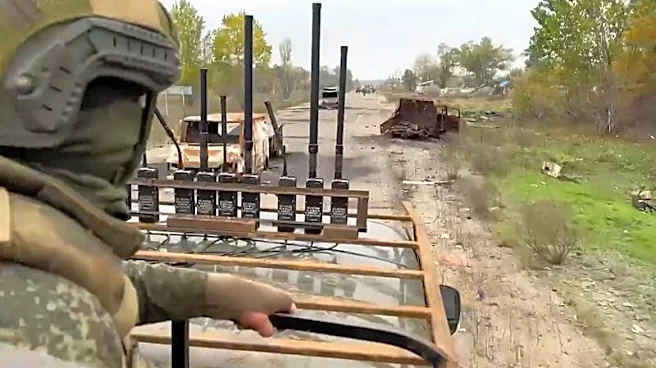
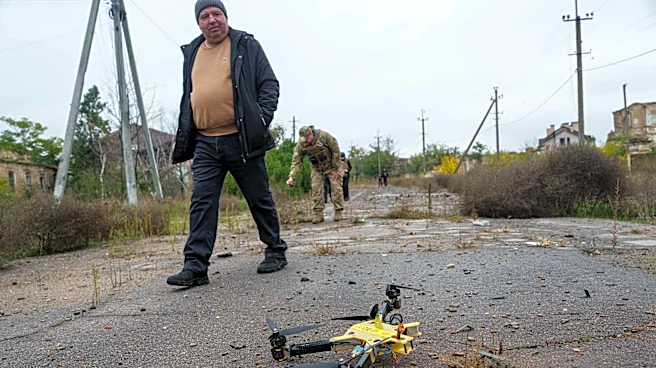
systems, command posts, and repair bases. Specifically, Ukrainian forces struck 19 Russian air defense, electronic warfare, and radar systems, along with 20 facilities supporting Russian attack drone operations. Key targets included drone storage facilities in occupied cities like Berdiansk and Sievierodonetsk, as well as near Hvardiiske in Crimea. On October 28, Ukrainian forces also targeted three facilities near Navlya in Russia’s Bryansk region associated with Geran attack drone operations, including a warehouse, launch facility, and fuel depot. Additionally, 27 command posts, 47 storage facilities for ammunition and fuel, and 8 military repair facilities were hit.
Why It's Important?
These targeted strikes are crucial for degrading Russia's military capabilities and reducing its capacity to launch attack drones against Ukrainian territory, including civilian infrastructure. By hitting drone storage and launch facilities, Ukraine aims to disrupt the supply chain and operational readiness of Russian drone units. The destruction of air defense, electronic warfare, and radar systems creates gaps in Russia’s defensive coverage, potentially allowing Ukrainian forces greater freedom to deploy their own unmanned systems and conduct further offensive operations. Furthermore, targeting command posts and logistics hubs undermines Russia's ability to coordinate forces and sustain frontline operations, impacting its overall combat effectiveness. These actions are part of a broader strategy to weaken Russian military infrastructure and reduce its offensive potential.
What's Next?
Ukraine is likely to continue these medium-range strike operations to further degrade Russian military infrastructure, particularly focusing on drone capabilities and air defense networks. The Ministry of Defense's stated intent to reduce Russia's capacity to accumulate and launch attack drones suggests ongoing efforts to disrupt these operations. As Russia continues its drone attacks on Ukrainian energy infrastructure, Ukraine's counter-strikes will remain a critical component of its defense strategy. The success of these strikes may also influence the types of military aid Ukraine requests from international partners, potentially seeking more advanced long-range strike capabilities and intelligence assets to identify and target Russian military assets effectively.
Beyond the Headlines
The systematic targeting of Russian drone infrastructure highlights the evolving nature of modern warfare, where unmanned aerial vehicles play a central role in both offensive and defensive strategies. Ukraine's focus on disrupting these capabilities indicates a recognition of the significant threat posed by Russian drones. These strikes also demonstrate Ukraine's growing precision strike capabilities and intelligence gathering, allowing them to identify and neutralize key military assets deep within Russian-held territory and Russia itself. The ongoing tit-for-tat targeting of critical military infrastructure underscores the strategic importance of these assets in sustaining prolonged conflict and the continuous adaptation of tactics by both sides to gain an advantage.