





What's Happening?
Tensions in Gaza have escalated as local militias clash with Hamas over the control and support of Gazan civilians. Hussam al-Astal, leader of an anti-Hamas militia in Khan Younis, accuses Hamas of using psychological warfare to undermine the power of armed
groups and prevent Gazans from defecting to these militias. Hamas, on the other hand, claims that individuals associated with Israeli-backed armed groups have approached them seeking to defect and rejoin Hamas. The Radea force, a special Hamas security unit, reported receiving multiple appeals from individuals wanting to resolve their security files and return to their communities. Al-Astal argues that Hamas is spreading false information to maintain control and prevent people from moving to areas controlled by militias.
Why It's Important?
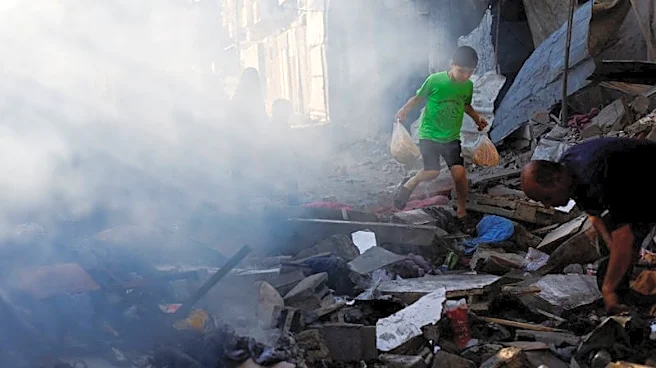
The conflict between Hamas and local militias in Gaza highlights the ongoing struggle for power and control in the region. This situation affects the daily lives of Gazans, who face challenges such as restricted movement, lack of access to essential services, and fear of violence. The power struggle also impacts the broader geopolitical landscape, as it involves Israeli interests and the potential for increased instability in the region. The outcome of this conflict could influence future governance and security dynamics in Gaza, affecting both local and international stakeholders.
What's Next?
The situation in Gaza remains volatile, with potential for further escalation if the conflict between Hamas and militias continues. The international community may need to intervene to mediate and prevent further violence. Additionally, the outcome of this power struggle could influence future peace negotiations and the implementation of plans for post-war Gaza, such as President Trump's 20-point plan. Stakeholders will likely monitor the situation closely to assess the impact on regional stability and security.