








What's Happening?
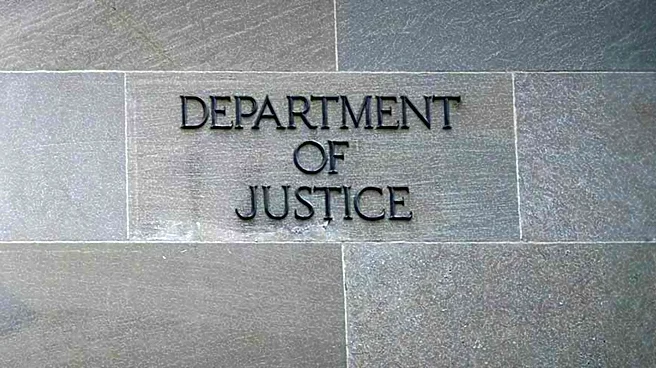
The U.S. Department of Justice's National Fraud Enforcement Division (NFED) has announced new charges of Medicaid fraud across the Southeast, resulting from enhanced federal-state partnerships. These charges involve 17 cases across seven states, including
Alabama, Florida, Georgia, Louisiana, Mississippi, North Carolina, and South Carolina. The DOJ has established federal-state cooperation agreements and anti-fraud task forces in these states, reflecting an increased focus on healthcare spending and Medicaid enforcement. This initiative follows a similar agreement with Ohio, described as a 'National Model of Federal-State Cooperation.'
Why It's Important?
The expansion of federal-state partnerships to combat Medicaid fraud highlights the DOJ's commitment to addressing healthcare fraud, a significant concern for both federal and state governments. By leveraging data analytics and fostering collaboration between federal and state agencies, the DOJ aims to enhance its ability to detect and prosecute fraudulent activities more efficiently. This initiative is crucial for safeguarding public funds and ensuring the integrity of Medicaid, a vital program for millions of Americans. The focus on data-driven enforcement could lead to more proactive and timely interventions, potentially reducing the overall incidence of fraud.
What's Next?
The DOJ's efforts to combat Medicaid fraud are expected to continue expanding, with potential partnerships in additional states. The use of data analytics will likely play a central role in these efforts, enabling the DOJ to identify and address fraudulent activities more swiftly. Companies involved in Medicaid services should be prepared for increased scrutiny and consider conducting their own data analyses to identify potential red flags. The DOJ's emphasis on rapid enforcement timelines suggests that entities found to be engaging in fraudulent activities may face swift legal action.