









What's Happening?
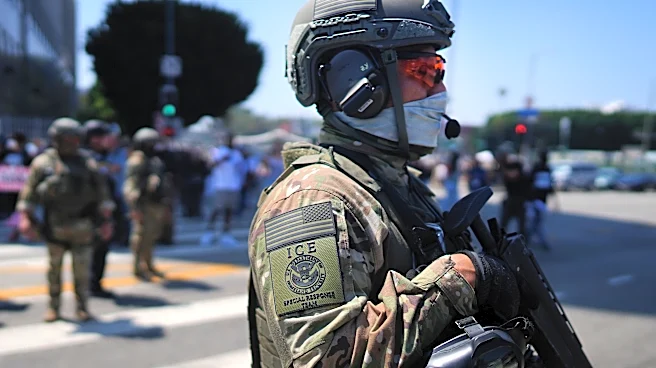
U.S. Immigration and Customs Enforcement (ICE) has announced plans to equip all field officers with body cameras by the end of August. This decision comes in the wake of increased scrutiny following two fatal shootings by ICE officers that were not recorded.
The agency's body camera policy has been criticized for allowing ICE leadership to withhold or delay footage release, particularly in cases involving serious injuries or deaths. Acting Director David J. Venturella defended the policy, stating it aims to protect investigations and privacy, aligning with federal law and other agencies' practices. The policy includes provisions for expedited footage release when deemed in the agency's best interest. The move to equip officers with cameras is part of ICE's commitment to transparency and accountability.
Why It's Important?
The implementation of body cameras for ICE officers is significant as it addresses public concerns over transparency and accountability in law enforcement, particularly in immigration enforcement operations. The use of body cameras could provide a visual record of interactions, potentially reducing instances of misconduct and increasing public trust. However, the policy's allowance for selective footage release raises questions about the true extent of transparency. The decision could impact public perception of ICE and influence future policy discussions on law enforcement practices. Stakeholders, including civil rights groups, may view this as a step towards accountability, but concerns about footage accessibility and privacy remain.
What's Next?
As ICE moves forward with equipping officers with body cameras, the agency will likely face continued scrutiny over its policy on footage release. Civil rights organizations and lawmakers may push for clearer guidelines and greater transparency in the release of body camera footage. The effectiveness of this initiative in improving accountability will depend on how ICE manages and shares the footage. Future incidents involving ICE officers will test the agency's commitment to transparency and could lead to policy revisions. The broader implications for law enforcement agencies across the U.S. may include increased adoption of body cameras and discussions on standardized policies for footage management.