
What's Happening?
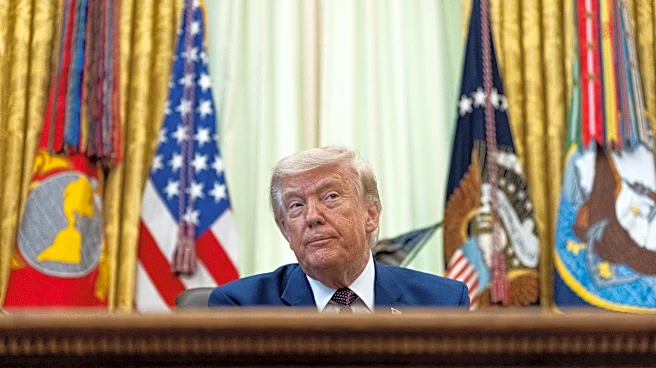
President Trump has issued a pardon for Stephen Buyer, a former U.S. Representative from Indiana, who was convicted of securities fraud related to insider trading. Buyer, who served in Congress from 1993
to 2011, was found guilty in March 2023 for making illegal trades as a consultant for T-Mobile US during its merger talks with Sprint in 2018. The pardon, announced by the White House, did not provide a specific rationale but highlighted Buyer's distinguished service as a U.S. Army judge advocate general and a member of Congress. The decision was reportedly influenced by the advice and recommendation of 52 current and former members of Congress.
Why It's Important?
The pardon of Stephen Buyer underscores the ongoing debate over the use of presidential pardons, particularly in cases involving financial crimes. Buyer's conviction was a significant case of insider trading, highlighting issues of corporate ethics and legal accountability. The pardon may raise questions about the message it sends regarding the consequences of financial misconduct. It also reflects the influence of political connections in the pardon process, as evidenced by the support from numerous lawmakers. This action could impact public trust in the justice system and the perceived fairness of legal proceedings for white-collar crimes.
What's Next?
Following the pardon, there may be increased scrutiny on the criteria and motivations behind presidential pardons, especially those involving high-profile individuals. Legal experts and political analysts might examine the implications for future cases of financial misconduct. Additionally, there could be calls for reform in the pardon process to ensure transparency and accountability. The decision may also prompt reactions from political leaders and advocacy groups concerned with legal ethics and corporate governance.