









What's Happening?
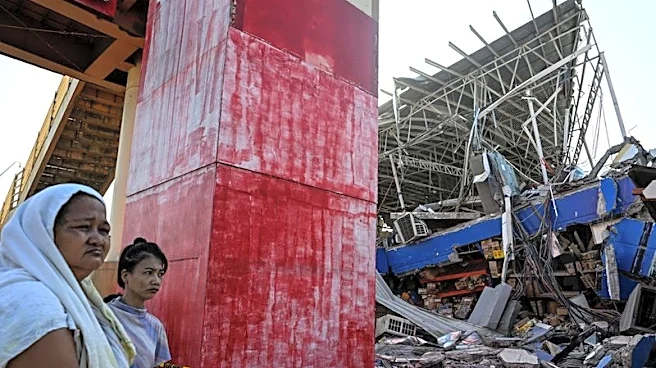
A powerful 7.8 magnitude earthquake struck the southern Philippines, resulting in at least 37 deaths and displacing over 20,000 people. The quake, centered off the island of Mindanao, caused significant destruction, including landslides and building collapses.
Rescue operations are ongoing as authorities search for survivors amidst the rubble. The earthquake has also triggered tsunami warnings, although only minor damage has been reported. The disaster has prompted a large-scale response from the government and international community, with efforts focused on providing relief and assessing the damage.
Why It's Important?
This earthquake is one of the strongest to hit the Philippines in decades, highlighting the country's vulnerability to natural disasters due to its location on the Pacific 'Ring of Fire.' The immediate impact on the affected communities is severe, with thousands displaced and infrastructure damaged. The disaster underscores the need for robust disaster preparedness and response strategies. It also raises concerns about the resilience of infrastructure and the capacity of local and national authorities to manage such crises effectively.
What's Next?
In the aftermath of the earthquake, the focus will be on rescue and relief operations, with authorities working to provide shelter and support to those affected. The government will likely conduct a thorough assessment of the damage to infrastructure and public services. International aid and support may be mobilized to assist in recovery efforts. Additionally, there may be increased emphasis on improving disaster preparedness and building resilience to future seismic events.