





What's Happening?
The Intercept and Freedom of the Press Foundation have filed a lawsuit in federal court seeking to block President Trump from offering early access to his social media posts on Truth Social for a monthly fee of up to $100,000. The service, known as Truth API,
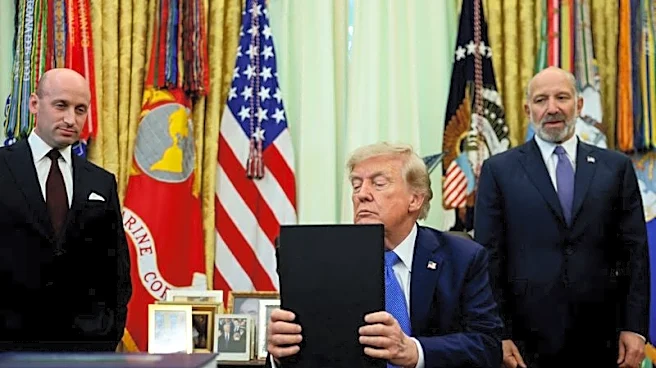
launched on August 1 and reportedly has over 10 paying customers. The plaintiffs argue that this scheme violates the First and Fifth Amendments of the U.S. Constitution by providing unequal access to official government information to those who pay President Trump's private company. President Trump uses his Truth Social account as his primary means of public communication and official announcements since returning to office. The lawsuit also highlights that President Trump holds the largest stake in Trump Media through The Donald J. Trump Revocable Trust, making Truth API a significant profit-making opportunity for him.
Why It's Important?
This lawsuit raises critical questions about transparency, public access to government information, and potential conflicts of interest for public officials. If President Trump's official statements are made available to paying customers before the general public, it could create an information asymmetry that benefits a select few, potentially impacting financial markets and public discourse. This practice challenges the principle of a free press and equal access to information, which are cornerstones of a democratic society. The plaintiffs argue that the president's actions constitute a 'corrupt assault on the constitution' and harm members of the press and public who cannot afford to pay for early access. The case could set a precedent for how public officials use private platforms for official communications and the ethical boundaries of monetizing such interactions.
What's Next?
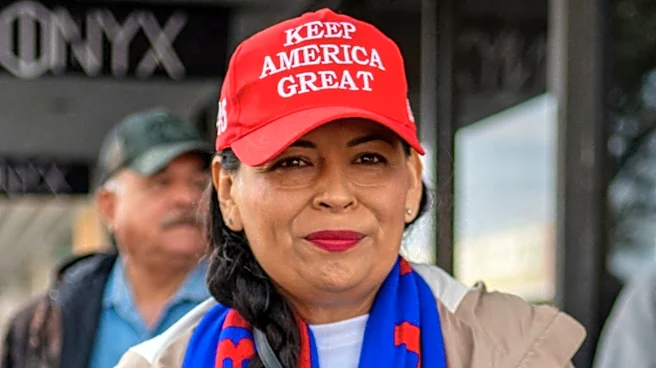
The plaintiffs have filed a motion for a preliminary injunction, which, if granted, would immediately prevent President Trump and other White House officials, including Natalie Harp and Dan Scavino, from posting on Truth Social as long as the president can profit from selling early access to government information. The legal proceedings will continue in the U.S. District Court for the Southern District of New York. The court's decision on the preliminary injunction will be a significant indicator of the potential outcome of the broader lawsuit. Regardless of the immediate ruling, the case is likely to draw considerable attention and could lead to further legal challenges or legislative discussions regarding the use of private social media platforms by public officials and the monetization of official communications.
Beyond the Headlines
This case delves into the evolving landscape of presidential communication in the digital age and the ethical dilemmas it presents. The concept of a 'paywall' for presidential statements challenges traditional notions of public service and government transparency. It highlights the tension between a public official's right to engage in private business ventures and their constitutional obligations to the public. The lawsuit could force a re-evaluation of existing laws, such as the Freedom of Information Act (FOIA) and the Presidential Records Act, in the context of social media. Furthermore, it could spark a broader debate about the influence of wealth on access to information and the potential for digital platforms to be used for personal profit by those in power, potentially eroding public trust in government institutions and the media.