







What's Happening?
Temple University has launched a new Essential Needs Hub within its Howard Gittis Student Center, providing students with access to food, affordable clothing, wellness support, and other crucial resources under one roof. The hub was designed with student input
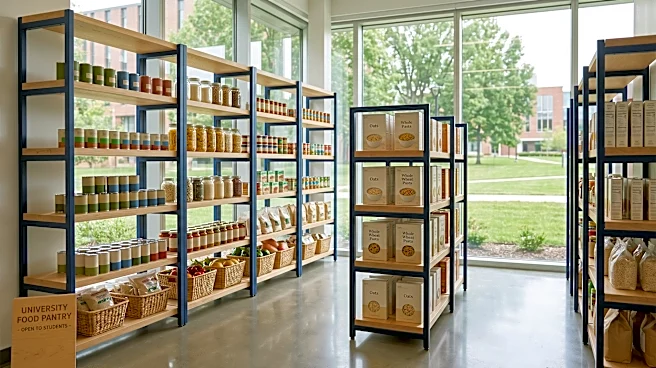
and aims to be a central location for resources students might need to navigate daily challenges. According to Jodi Accavallo, Temple's vice president for student affairs, the university broadly defines essential needs to include food and housing insecurity, emergency transportation, and childcare challenges. The hub includes the Barnett-Irvine-Cherry Pantry, where students can shop for groceries using a point system, and the Zen Den, a quiet wellness space with massage chairs. Additionally, Temple Thrift offers clothing items for under $10.
Why It's Important?
This initiative by Temple University addresses a critical and often overlooked aspect of student success: basic needs security. A significant number of college students in the U.S. face challenges such as food insecurity, housing instability, and financial strain, which can severely impact their academic performance and overall well-being. By consolidating essential resources into a single, accessible hub, Temple University is directly tackling these barriers, demonstrating a commitment to holistic student support. This model can serve as an important example for other universities grappling with similar issues, highlighting the need to move beyond traditional academic support to address the fundamental needs that enable students to thrive. The inclusion of student input in the hub's design underscores the importance of student-centered approaches in developing effective support services, ensuring that the resources provided truly meet their needs.
What's Next?
Temple University will hold an official ribbon-cutting ceremony for the Essential Needs Hub during its Homecoming weekend, further publicizing the new resource to the university community. The hub will continue to serve students, with staff helping connect them to additional resources like the Supplemental Nutrition Assistance Program (SNAP). The university will likely monitor the hub's usage and student feedback to refine and expand its offerings. Other universities may observe Temple's model to inform their own efforts in addressing student basic needs. The success of this initiative could encourage broader discussions within higher education about the responsibility of institutions to provide comprehensive support beyond academics, especially as the cost of living and education continues to rise.
Beyond the Headlines
The establishment of the Essential Needs Hub at Temple University reflects a growing recognition within higher education that the traditional image of the college student, free from financial and personal burdens, is outdated. Many students today are balancing multiple jobs, caring for family members, and struggling with basic necessities, which profoundly affects their ability to focus on their studies. This initiative highlights a shift towards a more compassionate and realistic understanding of the student experience. It also implicitly challenges the broader societal issue of affordability in education and the increasing economic pressures on young adults. By providing these resources, Temple is not just offering charity but is investing in the human potential of its students, acknowledging that a secure foundation is essential for intellectual and personal growth. This approach could foster a more equitable and supportive educational environment, ultimately benefiting society by producing more resilient and well-rounded graduates.