






What's Happening?
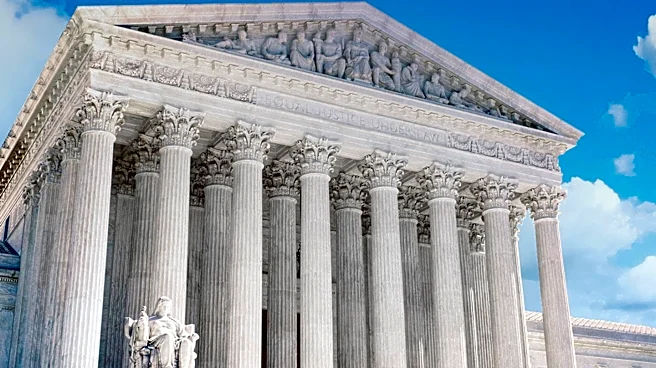
The United States Supreme Court has unanimously ruled that transportation brokers can be held accountable in state courts for negligently selecting unsafe trucking companies. This decision stems from a case involving Shawn Montgomery, a truck driver who
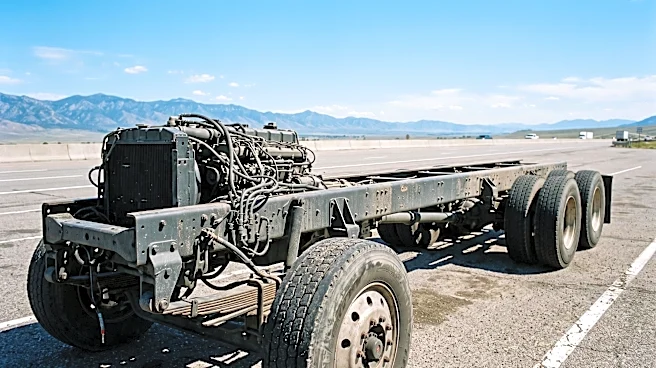
suffered severe injuries, including the loss of a leg, when his parked tractor-trailer was struck by a Mack Truck driven by Yosniel Varela-Mojena. Varela-Mojena was hauling a load for Caribe Transport II, a company with a 'conditional' federal safety rating, arranged through the broker C.H. Robinson Worldwide. Montgomery sued C.H. Robinson, alleging negligent hiring. The broker argued that the Federal Aviation Administration Authorization Act (FAAAA) shielded them from such state-law claims. However, the Supreme Court clarified that the FAAAA's safety exception, which permits state enforcement of safety rules 'with respect to motor vehicles,' applies to claims of negligent broker selection, thereby allowing Montgomery's lawsuit to proceed.
Why It's Important?
This Supreme Court ruling significantly alters the legal landscape for the U.S. trucking industry and enhances protections for individuals injured in truck accidents. Previously, brokers in many jurisdictions could use the FAAAA to avoid liability for their choice of carriers, even if those carriers had poor safety records. The unanimous decision closes this loophole, establishing that brokers have a duty to exercise reasonable care when selecting trucking companies. This will likely incentivize the approximately 28,000 brokers in the U.S., who arrange about a third of all freight shipments, to conduct more thorough vetting of carriers. The ruling empowers injured parties to seek justice from brokers who disregard safety, potentially leading to a reduction in accidents caused by unsafe trucking practices and fostering greater accountability across the supply chain. It also affirms the states' power to enforce common-law safety duties, ensuring that federal deregulation does not compromise public safety.
What's Next?
Following this Supreme Court decision, transportation brokers are expected to re-evaluate and strengthen their vetting processes for trucking companies to mitigate potential liability. This could involve more rigorous checks of federal safety records, driver qualifications, and vehicle maintenance histories. The ruling may also prompt Congress to consider legislative action, as Justice Kavanaugh noted the 'odd situation' where brokers can be sued for interstate shipments but might still be shielded from lawsuits involving intrastate shipments. This disparity could lead to calls for legislative harmonization. For individuals involved in truck accidents, the path to holding brokers accountable is now clearer, potentially leading to an increase in lawsuits against brokers for negligent selection. This will likely result in a heightened focus on safety standards throughout the trucking and logistics sectors.
Beyond the Headlines
The Supreme Court's decision has profound implications beyond individual lawsuits, touching upon the ethical responsibilities of intermediaries in complex industries. It underscores a broader legal principle that entities facilitating dangerous activities, even indirectly, bear a degree of responsibility for ensuring safety. This ruling could set a precedent for other industries where brokers or third-party facilitators connect service providers with clients, potentially expanding liability for negligent selection across various sectors. Culturally, it reinforces the idea that profit motives should not supersede public safety, pushing companies to prioritize due diligence. The increased scrutiny on brokers could also lead to a more transparent and accountable trucking industry, ultimately benefiting all road users by promoting safer practices and reducing the incidence of preventable accidents. This decision represents a significant step towards ensuring that all parties involved in the transportation of goods are held to a high standard of care.