





What's Happening?
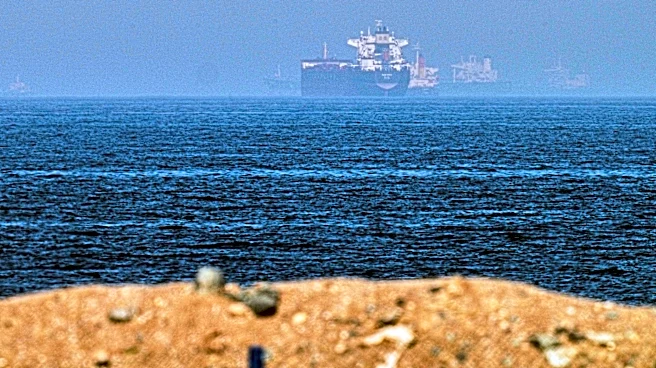
President Trump has announced that a deal to reopen the Strait of Hormuz could be finalized as early as Wednesday. The agreement, involving Iran and Oman, aims to resume shipping through this critical waterway, which has been closed due to ongoing conflicts.
The closure has significantly impacted global oil and gas supplies, driving up prices and affecting economies worldwide. The potential reopening of the strait is seen as a crucial step towards stabilizing the region and alleviating economic pressures.
Why It's Important?
The Strait of Hormuz is a vital passage for global oil and gas transportation, and its closure has had far-reaching economic consequences. Reopening the strait would not only stabilize oil prices but also ease tensions in the region, potentially leading to broader diplomatic resolutions. For the U.S., this development is particularly significant as it could influence domestic economic conditions and political dynamics ahead of upcoming elections. The deal underscores the importance of international cooperation in addressing geopolitical challenges and maintaining global economic stability.
What's Next?
If the deal is finalized, shipping through the Strait of Hormuz could resume, leading to a decrease in oil prices and a stabilization of global markets. However, ongoing tensions in the region, including recent attacks on shipping vessels, highlight the fragile nature of the situation. Continued diplomatic efforts will be necessary to ensure long-term peace and security in the area. The U.S. and its allies may also need to engage in further negotiations to address underlying conflicts and prevent future disruptions.