




What's Happening?
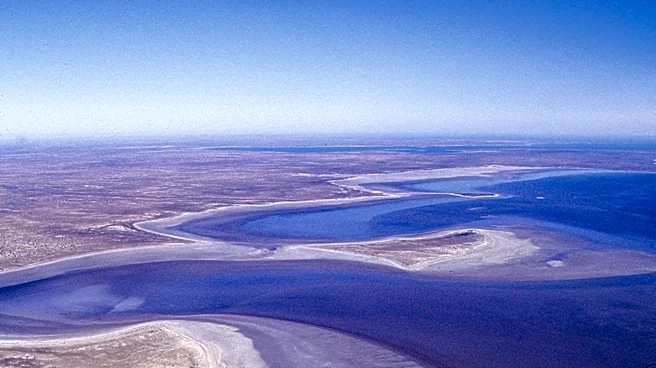
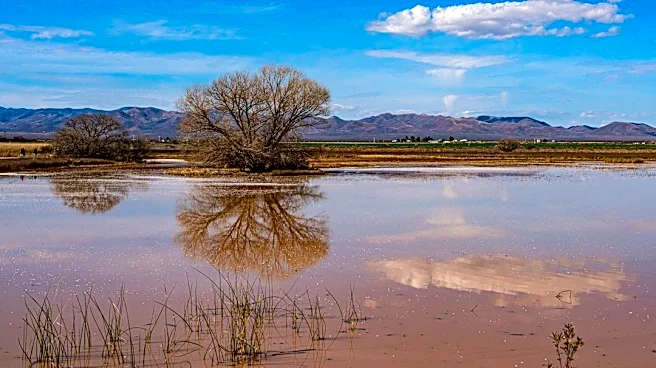
Utah's Great Salt Lake has reached historically low levels, creating significant environmental and public health concerns. The shrinking lake increases the risk of airborne heavy metals, arsenic, mercury, and other harmful chemical compounds being inhaled
by millions of people. This environmental degradation also endangers the lake's ecosystem, which is a critical stopover for millions of migratory birds. Furthermore, the decline of the Great Salt Lake could negatively impact Utah's ski industry, a key economic driver for the state. In response to these escalating issues, Utah Physicians for a Healthy Environment has initiated a lawsuit against the state of Utah, aiming to compel action for the lake's restoration. Dr. Brian Mench, Co-Founder and President of the group, is scheduled to discuss these concerns in Boise as part of the Climate & Health Learning Series.
Why It's Important?
The diminishing Great Salt Lake presents a multifaceted crisis with far-reaching implications for Utah and potentially the broader region. The primary concern is the public health risk posed by the exposure to toxic dust, which can lead to severe respiratory and other health problems for residents. Ecologically, the lake's decline threatens the survival of numerous bird species that rely on its unique habitat during their migratory journeys, potentially disrupting continental migratory patterns. Economically, the ski industry, a significant contributor to Utah's revenue and employment, could face adverse effects due to altered weather patterns or environmental perceptions linked to the lake's condition. The lawsuit filed by Utah Physicians for a Healthy Environment underscores the urgency and gravity of the situation, highlighting a growing demand for governmental accountability and proactive environmental management to protect both human health and natural resources.
What's Next?
The lawsuit filed by Utah Physicians for a Healthy Environment will likely proceed, potentially leading to legal battles that could mandate state intervention and funding for restoration efforts. Public awareness campaigns, such as Dr. Brian Mench's upcoming presentation in Boise, are expected to continue, aiming to galvanize public support and pressure policymakers for action. State and local governments may face increased scrutiny and calls to implement water conservation measures, re-evaluate water usage policies, and explore engineering solutions to replenish the lake. The scientific community will likely intensify research into the lake's hydrology and ecological needs to inform effective restoration strategies. Stakeholders, including environmental groups, health organizations, and affected industries, will continue to advocate for comprehensive solutions to mitigate the ongoing environmental and health crisis.
Beyond the Headlines
The shrinking of the Great Salt Lake highlights broader issues of water management in arid regions and the long-term consequences of climate change and human activity on vital ecosystems. This situation could serve as a critical case study for other regions facing similar environmental challenges, emphasizing the interconnectedness of water resources, public health, and economic stability. The legal action taken by health professionals also underscores a growing trend where environmental degradation is increasingly framed as a public health crisis, potentially setting precedents for future environmental litigation. Furthermore, the impact on migratory bird populations points to the global implications of local environmental issues, as these birds traverse international boundaries, making the lake's health a matter of international ecological concern. The crisis may also prompt a re-evaluation of urban development and agricultural practices in Utah, pushing for more sustainable approaches to water consumption.