



What's Happening?
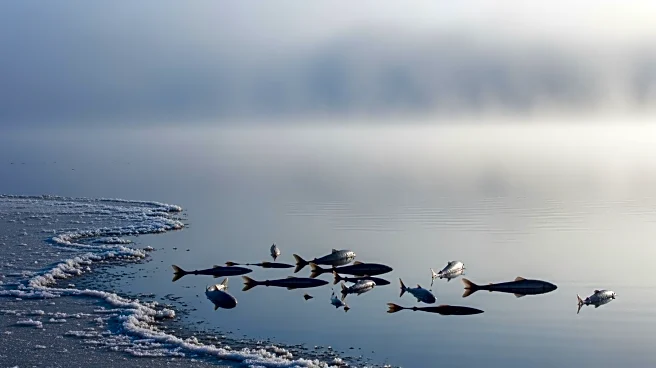
Hundreds of dead fish have been found along the shoreline of Lake Apopka in Florida, attributed to recent cold weather causing cold stress among fish populations. The Florida Fish and Wildlife Conservation Commission (FWC) confirmed that the majority
of the dead fish are tilapia, a non-native species. The cold stress weakens the fish's immune systems, leading to death. This event is part of a broader pattern of fish kills across Florida due to unusually cold temperatures. Lake Apopka has been the focus of extensive environmental restoration efforts, making the die-off particularly concerning for local residents and environmentalists.
Why It's Important?
The fish die-off at Lake Apopka highlights the vulnerability of ecosystems to extreme weather events, which can have significant ecological and economic impacts. The incident underscores the challenges of managing invasive species and maintaining biodiversity in the face of climate variability. It also raises concerns about the effectiveness of ongoing restoration efforts at Lake Apopka, which have involved significant financial investment. The event may prompt further examination of climate adaptation strategies for wildlife management and conservation in Florida.
What's Next?
The FWC expects more reports of fish kills as cold-stressed fish succumb to secondary infections. The agency is encouraging public reporting of fish kills and advises against handling dead wildlife. Wildlife managers will continue to monitor affected waterways, and natural decomposition and scavenging wildlife are expected to gradually remove the dead fish. The incident may lead to increased scrutiny of environmental policies and restoration projects in Florida, as well as discussions on how to better protect ecosystems from climate-related stressors.