






What's Happening?
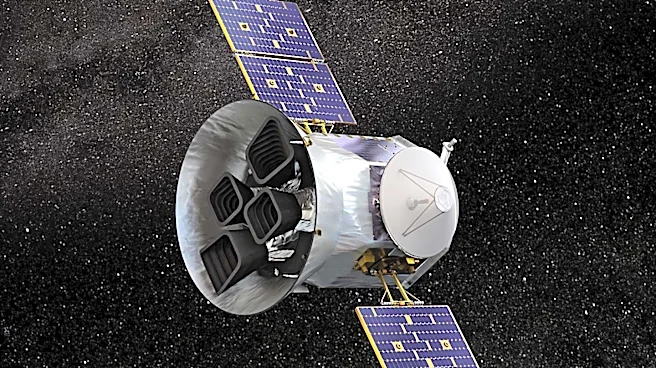
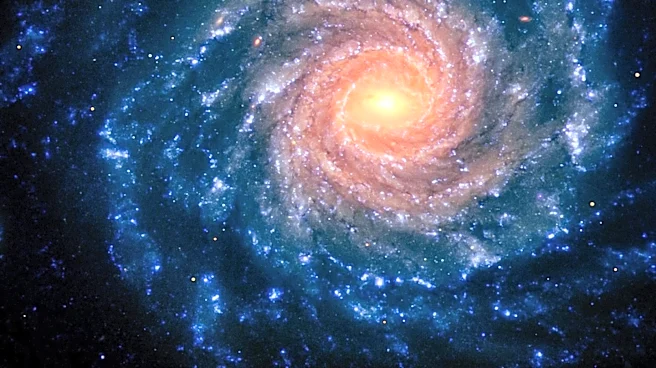
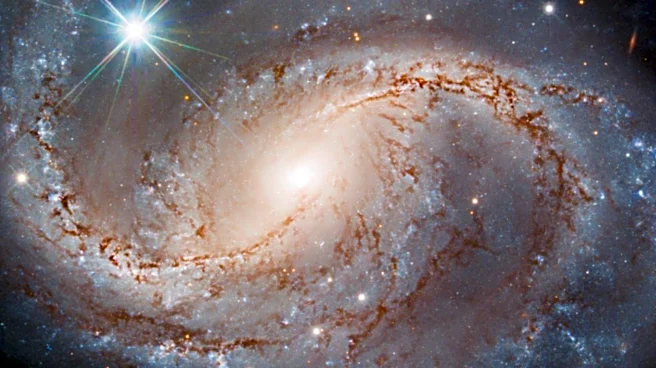
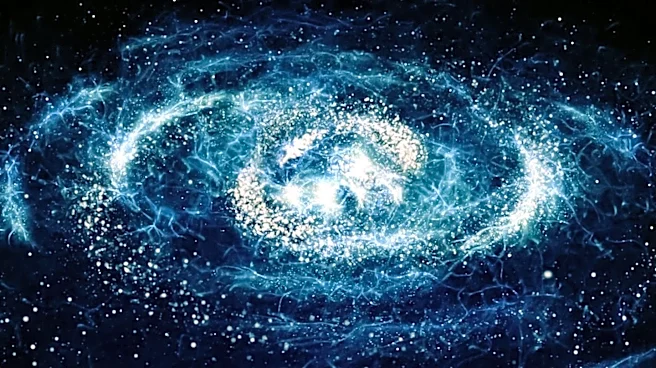
Astronomers have discovered that the spiral arms of the Milky Way galaxy extend further than previously believed. Using data from NASA's Chandra X-ray Observatory and the European Space Agency's XMM-Newton Observatory, researchers have made precise measurements
of the galaxy's spiral arms. The study involved observing X-ray light scattered by dust in the Milky Way's arms, which echoed from gamma-ray bursts. These bursts, the most powerful explosions in the universe, occur when massive stars collapse or neutron stars collide. The findings suggest that the galaxy's arms, including the Perseus, Outer, and Outer-Scutum-Centaurus arms, are about ten percent more distant than earlier estimates. This discovery could lead to a reevaluation of the Milky Way's mass distribution, rotation, and overall structure.
Why It's Important?
The new measurements of the Milky Way's spiral arms have significant implications for our understanding of the galaxy's structure and evolution. By revealing that the arms extend further than previously thought, astronomers may need to revise estimates of the galaxy's mass and how it rotates. This could impact theories about the distribution of matter within the galaxy and its overall dynamics. The findings also highlight the importance of gamma-ray bursts as a tool for measuring cosmic distances, although such events are rare and difficult to observe. The study underscores the complexity of the Milky Way and the need for continued research to refine our understanding of its structure.
What's Next?
Future research will likely focus on further refining measurements of the Milky Way's structure and exploring the implications of these findings for our understanding of the galaxy's evolution. Astronomers will continue to monitor gamma-ray bursts to gather more data, although the rarity of these events poses a challenge. The study's authors emphasize the need for ongoing observation and analysis to build on these findings and enhance our knowledge of the Milky Way. As new data becomes available, scientists may need to adjust existing models of the galaxy's structure and dynamics.