







What's Happening?
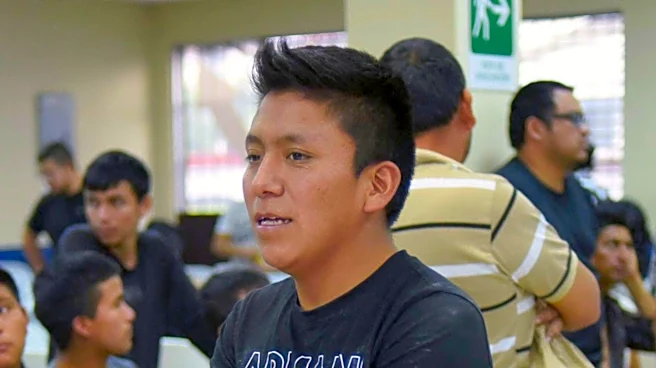
José Eliezer Martinez-Andino, a 20-year-old Honduran man with Special Immigrant Juvenile Status, who was wrongfully deported earlier this year, has been released from a Texas detention center and is set to return to Raleigh, North Carolina, to reunite
with his family. Martinez-Andino was detained and swiftly deported by federal immigration officials after being encountered during a cross-country trip. U.S. District Court Judge Beryl Howell ordered the Department of Homeland Security (DHS) in June to facilitate his return to the U.S. After being flown to Texas, he was held for over a month by Immigration and Customs Enforcement (ICE) at the Port Isabel Detention Center. His legal team eventually reached a settlement with DHS for his release, dismissing the litigation. Martinez-Andino's case highlights the complexities and challenges faced by individuals with legal protections within the U.S. immigration system.
Why It's Important?
This case underscores critical issues within the U.S. immigration system, particularly concerning the protection of individuals with Special Immigrant Juvenile Status (SIJS). Martinez-Andino's wrongful deportation and subsequent court-ordered return highlight potential failures in identifying and upholding legal protections for vulnerable populations. His experience, including prolonged detention despite having SIJS, raises questions about the consistency and fairness of immigration enforcement practices. The settlement reached with DHS, while securing his release, also points to the significant legal efforts required to rectify such errors. This situation is important as it demonstrates the impact of immigration policies on individuals and families, and the role of the judiciary in ensuring that legal rights are respected, even amidst broader enforcement efforts. It also brings attention to the differing interpretations and applications of immigration law across various U.S. circuit courts.
What's Next?
José Eliezer Martinez-Andino is currently with a relative in Texas and is expected to return to Raleigh next week to reunite with his family, including his U.S.-born daughter. His legal team anticipates that he may soon be eligible to apply for a green card, depending on the monthly visa bulletin. This case may also influence future legal interpretations and enforcement practices regarding individuals with Special Immigrant Juvenile Status, especially given the U.S. Court of Appeals Fourth Circuit's recent ruling that individuals in Martinez-Andino's position should not face mandatory detention. His return will allow him to resume his life and pursue his passion for auto mechanics, but his experience will likely remain a poignant example in ongoing discussions about immigration reform and due process.
Beyond the Headlines
Martinez-Andino's ordeal goes beyond a simple administrative error; it illuminates the human cost of an immigration system under immense pressure. His wrongful deportation, despite having a clear pathway to legal residency, reveals a systemic vulnerability where individuals with legitimate claims can be caught in enforcement dragnet. The fear he expressed about returning to the U.S. and the trauma of detention, even after being cleared, highlight the psychological toll these experiences take. This case also brings to light the differing legal landscapes across U.S. circuit courts, where an individual's fate can be significantly influenced by geographical jurisdiction. It underscores the need for clearer guidelines and more consistent application of immigration laws to prevent similar injustices and ensure that legal protections, such as SIJS, are effectively honored. The story serves as a powerful reminder of the personal narratives behind complex immigration policies.