
What's Happening?
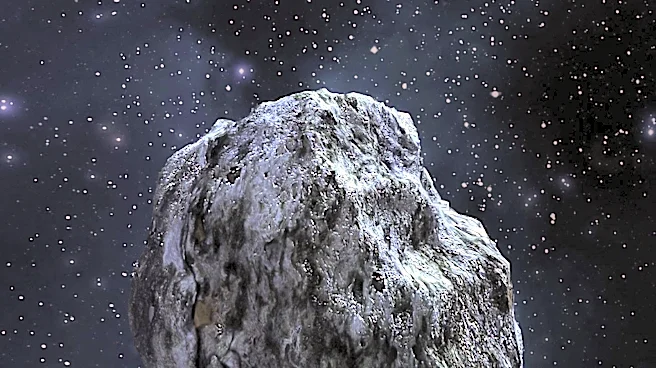
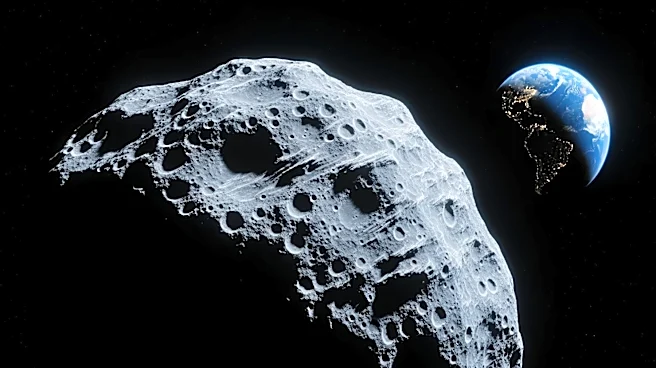
A newly discovered asteroid, designated 2026 JH2, is set to make a close approach to Earth on May 18, 2026. The asteroid, which is bus-sized, will pass within 56,000 miles of Earth, approximately a quarter
of the distance to the Moon. Despite its proximity, scientists assure there is no risk of impact. The asteroid's size and speed are comparable to the 2013 Chelyabinsk meteor, which caused significant damage in Russia. This event presents a unique opportunity for scientists to study near-Earth objects and improve understanding of their trajectories and characteristics. The asteroid was detected by observatories in Arizona, Kansas, and New Mexico, highlighting the challenges of tracking small, fast-moving space rocks.
Why It's Important?
The close flyby of asteroid 2026 JH2 underscores the importance of monitoring near-Earth objects, which can pose potential threats to the planet. While this asteroid is not expected to impact Earth, its proximity highlights the need for continued vigilance and research in planetary defense. The event provides a valuable opportunity for scientists to gather data that can refine models of asteroid behavior and improve prediction accuracy. Understanding these objects is crucial for developing strategies to mitigate potential future impacts, which could have catastrophic consequences for populated areas.
What's Next?
As the asteroid approaches, astronomers will continue to track its path and gather data to refine its orbital calculations. The Virtual Telescope Project plans to livestream the flyby, allowing the public and amateur astronomers to observe the event. This engagement can help raise awareness about the importance of asteroid monitoring and planetary defense. Future research may focus on developing technologies to alter the trajectories of potentially hazardous asteroids, ensuring Earth's safety from cosmic threats.