

What's Happening?
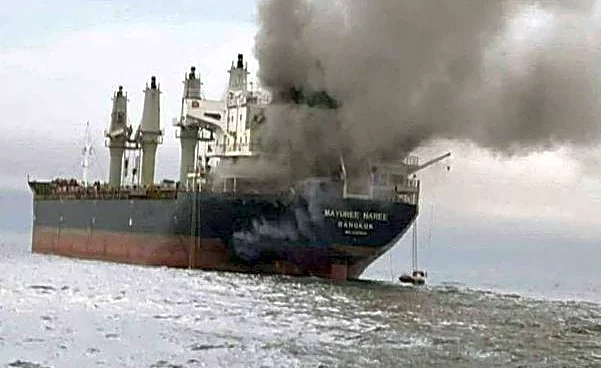
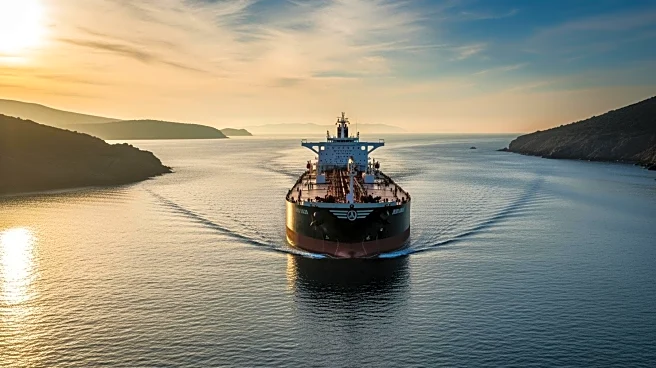
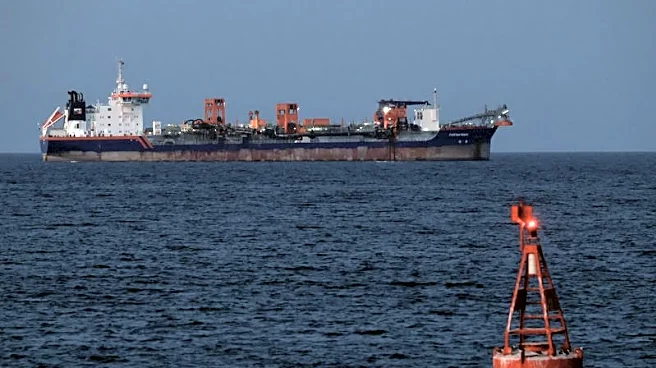
Iranian forces have attacked three vessels in the Strait of Hormuz, marking a significant escalation in regional tensions. The attacks occurred on Wednesday, with the Thai-flagged Mayuree Naree reporting a fire in its main engine room, forcing the crew
to evacuate. The Islamic Revolutionary Guard Corps (IRGC) claimed responsibility for the attack, stating that the ship ignored warnings to stay away from the strait. The United Kingdom Maritime Trade Operations (UKMTO) confirmed the incident, noting that the fire was extinguished without environmental impact. Two other ships, the Japan-flagged One Majesty and the Marshall Islands-flagged Star Gwyneth, were also targeted, sustaining damage but with all crew members safe. The attacks coincide with Iran's increased military actions in the region, including missile and drone strikes.
Why It's Important?
The Strait of Hormuz is a critical maritime chokepoint through which a significant portion of the world's oil supply is transported. The recent attacks by Iran could disrupt global oil markets and heighten geopolitical tensions, particularly between Iran and Western nations. The U.S. Central Command has issued warnings to civilians to avoid ports in the area, highlighting the potential for further military confrontations. These developments could lead to increased military presence and heightened security measures in the region, affecting international shipping and trade routes. The situation underscores the fragile nature of Middle Eastern geopolitics and the potential for conflict to impact global economic stability.
What's Next?
In response to the attacks, the U.S. and its allies may increase naval patrols and security measures in the Strait of Hormuz to ensure the safety of commercial vessels. Diplomatic efforts may intensify to de-escalate tensions and prevent further military confrontations. The international community will likely monitor the situation closely, with potential implications for oil prices and global trade. Iran's actions could prompt discussions at international forums, such as the United Nations, to address maritime security and regional stability. The situation remains fluid, with the potential for further developments as stakeholders react to the escalating conflict.