





What's Happening?
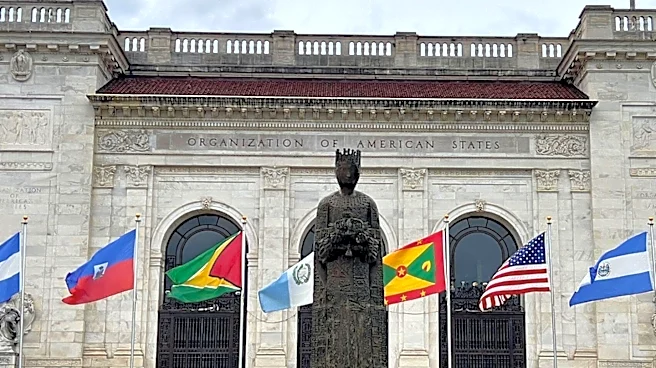
The Organisation of American States (OAS) has been designated as the executing agency for 'SargMarine,' a regional project aimed at tackling massive sargassum influxes in the Greater Caribbean. This initiative, financed by a US$10 million grant from the Global
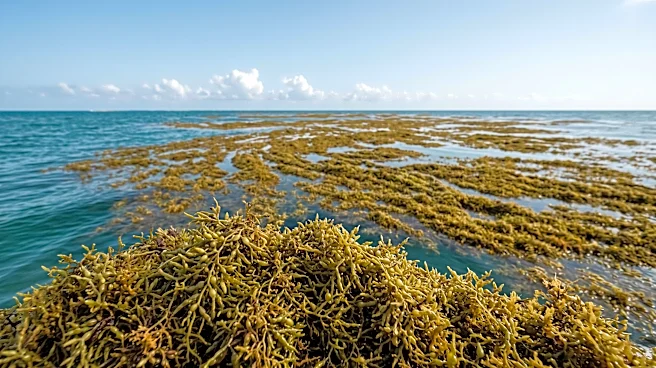
Environment Facility (GEF) with an additional US$67.3 million in co-financing, was presented at COP31. CAF, the Development Bank of Latin America and the Caribbean, will serve as the implementing agency, and the Inter-American Institute for Global Change Research (IAI) will provide technical support. The project will benefit seven Caribbean countries, including Trinidad and Tobago, Colombia, Panama, the Dominican Republic, Jamaica, Grenada, and Saint Lucia. Its objectives include strengthening early warning systems, improving regional coordination, and developing productive uses for harvested sargassum to support local economies. The United Nations Environment Programme reported 37.5 million tonnes of sargassum in the Atlantic in May 2025, marking the highest volume since monitoring began in 2011.
Why It's Important?
The persistent and increasing influx of sargassum poses significant economic and environmental challenges to Caribbean nations, impacting tourism, fisheries, coastal ecosystems, and public health. This US$10 million project, with the OAS as a key executing agency, signifies a crucial step towards a more coordinated and regional approach to a transboundary problem. By fostering information sharing, enhancing countries' capacity to anticipate and manage sargassum, and exploring economic alternatives for its use, the initiative aims to mitigate the severe disruptions caused by the seaweed. The involvement of international bodies like the GEF and CAF, alongside the OAS, underscores the global recognition of this issue and the need for collaborative solutions. Successful implementation could safeguard vital tourism revenues, protect marine biodiversity, and create new economic opportunities for affected communities, thereby contributing to regional stability and sustainable development.
What's Next?
With final approval secured, the SargMarine initiative is set to commence operations. The immediate next steps will involve strengthening monitoring and forecasting capabilities in the participating Caribbean countries to better predict sargassum arrival and location. This improved foresight will enable more effective deployment of protection efforts and facilitate planning for the productive use of the seaweed. Furthermore, the project will focus on developing and implementing strategies to turn sargassum into an economic resource, potentially creating new industries and jobs in affected areas. Continued regional cooperation and the sharing of scientific information will be critical for the long-term success of this initiative, as emphasized by officials from various participating nations. The project aims to move beyond individual national responses to a more integrated regional strategy.
Beyond the Headlines
The SargMarine project highlights a broader shift towards addressing complex environmental challenges through international cooperation and regional integration. The scale of the sargassum problem, which transcends national borders, necessitates a collective response that connects scientific research with public policy and investment. This initiative could serve as a model for how international organizations like the OAS can facilitate multi-stakeholder partnerships to tackle environmental crises with significant socio-economic impacts. Beyond the immediate goal of sargassum management, the project's emphasis on developing productive uses for the seaweed could spur innovation in bio-economy and circular economy practices within the Caribbean. It also underscores the importance of considering community needs and economic consequences in environmental policy, ensuring that solutions are not only ecologically sound but also socially equitable.