



What's Happening?
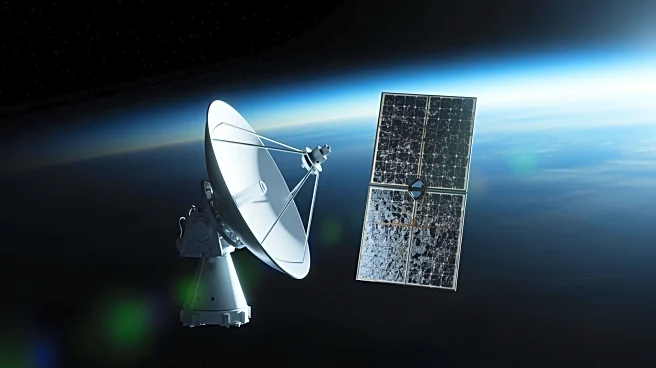
NASA is exploring partnerships to extend the operational life of three aging Earth observation satellites: Terra, Aqua, and Aura. Launched between 1999 and 2004, these satellites are running out of fuel and drifting from their orbits, with end-of-life
dates projected between 2027 and 2028. Despite their age, the satellites continue to provide valuable data for weather forecasting, air quality monitoring, and disaster response. NASA's request for information seeks partners from industry, academia, and government to maintain data collection and distribution, potentially extending the satellites' missions.
Why It's Important?
The continuation of data collection from these satellites is crucial for ongoing environmental monitoring and research. By partnering with external organizations, NASA aims to reduce its operational burden while advancing the commercial remote sensing industry. The data provided by these satellites supports critical applications in climate science, natural disaster management, and public health. Extending their operational life ensures the continuity of valuable datasets that inform policy decisions and scientific research.
What's Next?
NASA's request for information outlines potential partnership models, including fully-reimbursable, non-reimbursable, and hybrid arrangements. Interested parties are invited to submit comments by January 29, with the possibility of a formal solicitation for partnership proposals. The scope of the partnership would cover mission operations, instrument calibration, and data processing. As NASA evaluates responses, the agency will determine the best approach to sustain the satellites' contributions to Earth observation and environmental science.