


What's Happening?
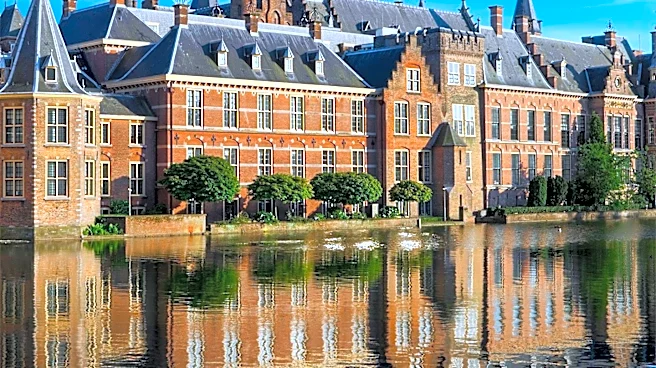
A recent event in The Hague, organized by 'Dwars op het Nieuws' and 'De Vierde Golf', featured a reflection on the Dutch Parliamentary Inquiry into the COVID-19 pandemic. Key figures such as Maurice de Hond, Armand Girbes, and Jona Walk discussed the perceived
failures in scientific and political responses to the pandemic. Maurice de Hond criticized the scientific community for not adequately challenging government policies, particularly regarding the airborne transmission of the virus. Jona Walk highlighted discrepancies between scientific data and public statements about vaccine safety and efficacy. Armand Girbes emphasized the problematic intertwining of science and politics, which he believes compromised scientific integrity. The event underscored the need for a thorough evaluation of the pandemic response to prevent similar issues in the future.
Why It's Important?
The discussions at the event reveal significant concerns about the handling of the COVID-19 pandemic in the Netherlands, with implications for public trust in science and government. The criticism of scientific and political institutions for their pandemic response could lead to a reevaluation of how such crises are managed. This is particularly relevant for the U.S., where similar debates about the balance between public health measures and individual freedoms have occurred. The event highlights the importance of maintaining scientific integrity and transparency in public health policy, which is crucial for ensuring public trust and effective crisis management.
What's Next?
The event suggests a need for ongoing reflection and evaluation of the pandemic response, both in the Netherlands and globally. This could involve more robust mechanisms for scientific debate and critique, as well as a reevaluation of the relationship between science and politics. In the U.S., similar discussions could influence future public health policies and the role of scientific advisory bodies. The outcomes of such evaluations may lead to changes in how governments prepare for and respond to public health emergencies, potentially affecting policy decisions and public perceptions.
Beyond the Headlines
The event also raises broader questions about the role of science in society and the potential consequences of its politicization. The criticism of the Dutch response to COVID-19 reflects a deeper concern about the integrity of scientific processes and the influence of political agendas. This has implications for how scientific research is funded and conducted, as well as for the public's perception of science as an objective and reliable source of information. The discussions underscore the need for a clear separation between scientific inquiry and political decision-making to preserve the credibility and effectiveness of both.