





What's Happening?
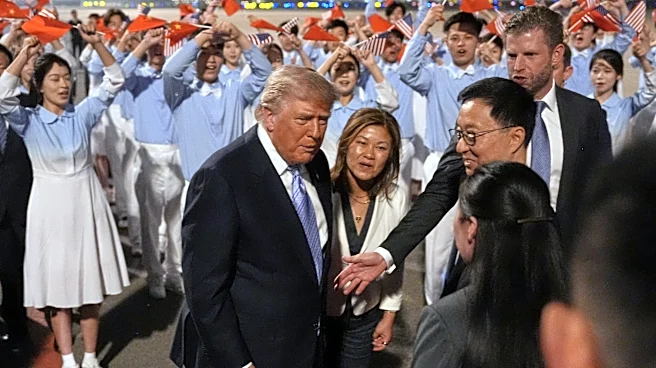
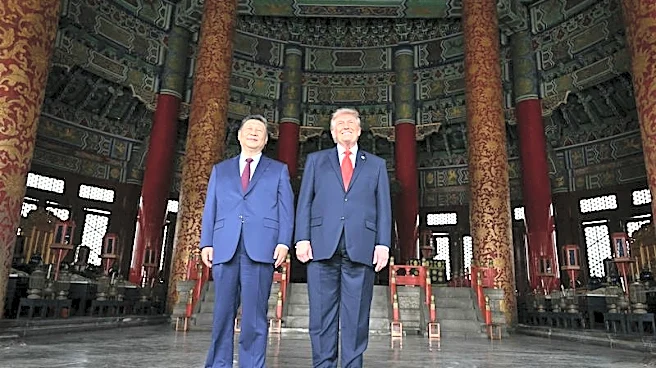
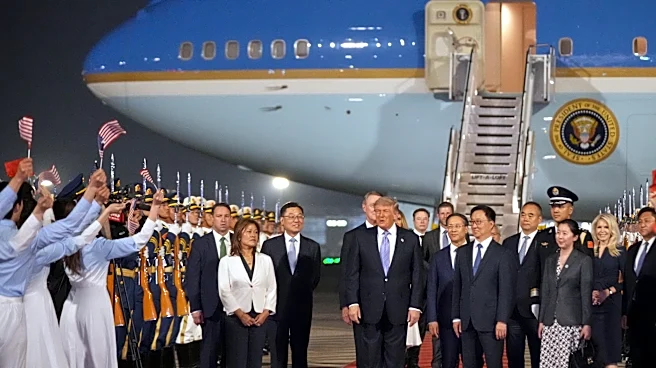
MS NOW host Jen Psaki addressed accusations from Eric Trump, President Trump's son, regarding his alleged connections to the crypto-linked firm ALT5 Sigma. The controversy arose after Psaki reported on Eric Trump's involvement with ALT5 Sigma during President Trump's state
visit to China. Eric Trump denied being on the board of ALT5 Sigma, despite reports and SEC filings indicating his role as an 'observer' on the board. Psaki aired footage from a Nasdaq ceremony where Eric Trump was introduced as a board member, further complicating the narrative. The issue centers around ALT5 Sigma's potential deal with a Chinese chipmaker, which has raised concerns among U.S. lawmakers due to its ties to the Chinese Communist Party. Psaki highlighted the relationship between ALT5 Sigma and World Liberty Financial, a crypto company co-founded by Eric Trump.
Why It's Important?
This development is significant as it touches on potential conflicts of interest involving the President's family and international business dealings. The scrutiny of Eric Trump's ties to ALT5 Sigma and its dealings with a Chinese chipmaker could have implications for U.S.-China relations, especially given the geopolitical tensions surrounding technology and trade. The situation also raises questions about transparency and accountability within the Trump family's business ventures, which could impact public trust and political dynamics. The legal threats from Eric Trump against MS NOW and Psaki underscore the contentious nature of media coverage and the challenges faced by journalists in reporting on high-profile figures.
What's Next?
The unfolding situation may lead to further investigations into the Trump family's business dealings, particularly those involving international partners. Political leaders and regulatory bodies might seek more information on the nature of these relationships and their implications for national security. The media will likely continue to scrutinize the Trump family's business activities, potentially leading to more legal confrontations. Public and political reactions could influence future policy decisions regarding foreign investments and corporate governance.