






What's Happening?
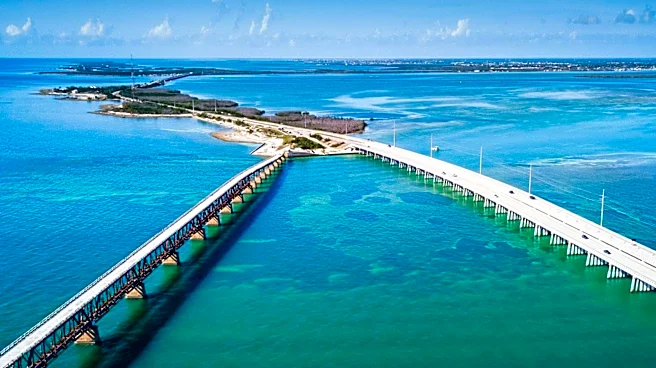
A new subsea research habitat named Vanguard has been launched off the coast of the Florida Keys at Tennessee Reef. This is the first open-ocean, ambient-pressure subsea research habitat built in over forty years. Developed by ocean engineering company
DEEP, Vanguard allows scientists to live and work underwater, significantly extending the time they can spend conducting research. The habitat features an integrated moon pool for easy entry and exit, enabling researchers to conduct 6-to-8-hour dives and process samples directly within the habitat. This development marks a significant advancement in marine science, allowing for more comprehensive and prolonged studies of underwater ecosystems.
Why It's Important?
The launch of Vanguard represents a major leap forward in marine research capabilities. By allowing scientists to remain underwater for extended periods, it facilitates more detailed and continuous study of marine environments, which is crucial for understanding oceanic ecosystems and their responses to environmental changes. This could lead to breakthroughs in coral restoration and other marine conservation efforts. The ability to process samples on-site without returning to the surface could also enhance the accuracy and efficiency of scientific research. This innovation may inspire further developments in subsea technology, potentially leading to new discoveries in marine biology and ecology.
What's Next?
The deployment of Vanguard is expected to inspire a new generation of marine scientists and explorers. As researchers begin to utilize this habitat, it could lead to significant advancements in our understanding of marine ecosystems. The success of Vanguard may prompt further investment in similar technologies, expanding the scope of underwater research. Additionally, the habitat could serve as a model for future subsea research facilities, potentially leading to a network of such habitats around the world, enhancing global marine research capabilities.