






What's Happening?
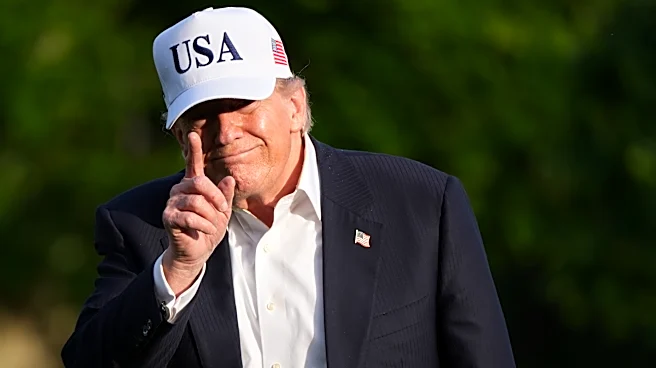
The 'Daily Show' recently aired a segment where correspondent Ronny Chieng criticized President Trump for allegedly using his position to enrich himself and his family through stock market manipulation. The segment highlighted reports that President Trump purchased
stocks in publicly traded companies and subsequently promoted these companies and their products. A specific instance mentioned was Trump's purchase of millions of shares in Dell, followed by public endorsements of Dell computers. Chieng humorously suggested that such actions were blatantly corrupt, noting the absurdity of promoting Dell computers in 2026. The segment also referenced a Truth Social post by Trump that included a stock ticker symbol, further implying his involvement in stock manipulation.
Why It's Important?
This development is significant as it raises concerns about potential conflicts of interest and ethical violations by a sitting president. If true, these actions could undermine public trust in the presidency and the integrity of the U.S. financial markets. The allegations suggest that President Trump may have used his influence to manipulate stock prices for personal gain, which could have far-reaching implications for regulatory oversight and the enforcement of securities laws. Such behavior, if proven, could lead to calls for increased transparency and accountability for public officials to prevent similar incidents in the future.
What's Next?
The allegations against President Trump could prompt investigations by regulatory bodies such as the Securities and Exchange Commission (SEC) to determine the legality of his actions. Political opponents and ethics watchdogs may also push for legislative reforms to address potential loopholes that allow for such conflicts of interest. Public and media scrutiny is likely to increase, potentially influencing the political landscape and public opinion. The outcome of any investigations or legislative actions could set precedents for how similar cases are handled in the future.
Beyond the Headlines
The situation highlights broader ethical concerns about the intersection of politics and personal financial interests. It raises questions about the adequacy of existing regulations to prevent conflicts of interest and the potential need for stricter rules governing the financial activities of public officials. The case also underscores the role of media and satire in holding public figures accountable and shaping public discourse on issues of corruption and governance.