
What's Happening?
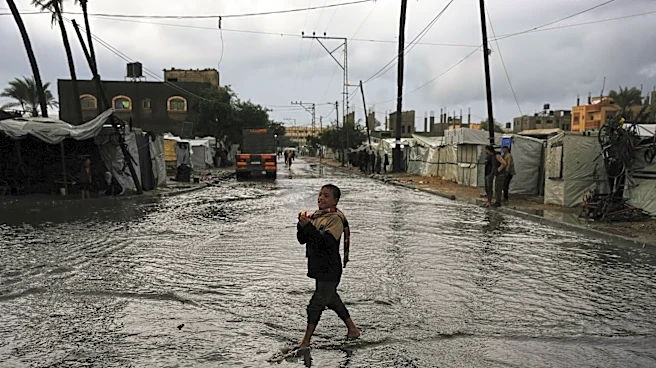
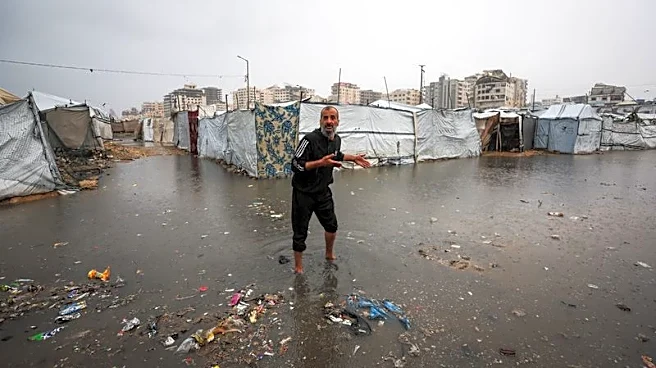
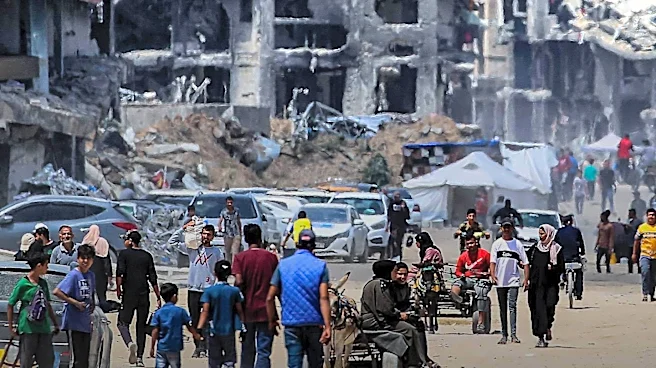
The Gaza Strip has been hit by its first winter storm of the season, resulting in severe flooding that has affected approximately 70,000 tents housing displaced Palestinian families. According to Gaza's
Government Media Office, the initial losses from the flooding are estimated at around $3 million. The heavy rainfall, which began early Saturday, has caused water levels in several displacement sites to rise by 30 to 40 centimeters, forcing thousands to evacuate their shelters. The Civil Defence agency reported receiving about 1,500 distress calls within 10 hours. Several shelter centers have been completely inundated, and dozens of walls have collapsed, leading to injuries and further damage to already weakened buildings. The Government Media Office holds Israel 'fully responsible' for the disaster, citing continued border closures and restrictions on the entry of essential shelter and reconstruction materials. Vulnerable populations, including premature babies, the elderly, and those with illnesses, face heightened risks due to the worsening conditions.
Why It's Important?
The severe flooding in the Gaza Strip exacerbates an already dire humanitarian crisis, highlighting the critical need for international intervention and the urgent provision of shelter materials. The destruction of tens of thousands of tents leaves a massive population of displaced Palestinians exposed to harsh weather, increasing the risk of illness and death, particularly among vulnerable groups. The inability to bring in adequate shelter and reconstruction supplies due to border restrictions means that relief efforts are severely hampered, prolonging the suffering of those affected. This situation also puts immense strain on Gaza's damaged healthcare infrastructure, as evidenced by the flooding of al-Shifa Medical Complex's emergency department. The mixing of sewage with rainwater in displacement tents creates a breeding ground for gastrointestinal, respiratory, and skin infections, threatening a public health catastrophe. The estimated $3 million in initial losses further devastates an economy already crippled by ongoing conflict.
What's Next?
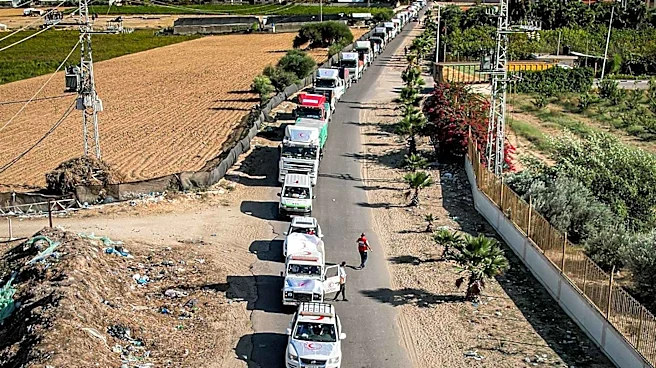
In the immediate future, rescue teams in Gaza will continue to respond to distress calls and attempt to evacuate affected individuals, despite lacking basic shelter materials like tarpaulins and tents. The emergency committee in Gaza has warned that over one million displaced people face a difficult winter and urgently requires approximately 200,000 tents and heating supplies. International organizations and UN agencies are being called upon to intervene immediately to protect displaced Palestinians and pressure Israel to allow more humanitarian aid, including shelter materials, into the territory. Aid organizations continue to blame Israeli restrictions for the shortage of essential supplies, with approximately 50,000 tents reportedly waiting on the Egyptian side of the border. Without a significant increase in aid and access, the humanitarian situation is expected to deteriorate further as winter progresses, leading to more displacement, illness, and potential fatalities.
Beyond the Headlines
The flooding in Gaza underscores the profound long-term implications of prolonged conflict and blockade on civilian populations. The repeated patching and re-stitching of tents, some in their fourth year of use, illustrate the extreme resilience and desperation of displaced families living in precarious conditions. The failure to replace these temporary shelters with more durable caravans, as stipulated under humanitarian protocols, points to a systemic issue of unmet humanitarian obligations and the politicization of aid. This crisis also highlights the ethical dilemma faced by the international community, which is called upon to provide assistance but often finds its efforts constrained by geopolitical realities. The psychological toll on a population repeatedly displaced and exposed to such harsh conditions, with little hope for permanent housing or stability, will have lasting societal impacts, potentially leading to increased trauma and long-term public health challenges beyond immediate physical ailments.