


What's Happening?
U.S. power grids successfully managed unprecedented electricity demand during a historic heat dome in July, primarily due to the significant growth of clean energy sources. Despite warnings from the U.S. Department of Energy for 17 states to prepare for blackouts,
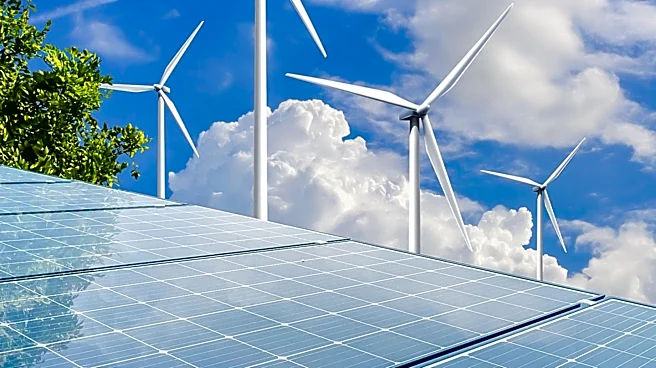
and instructions for PJM Interconnection (the largest regional grid covering parts of the Midwest and East Coast) to utilize backup power, the grid delivered record amounts of electricity without needing these emergency measures. This resilience is attributed to the massive expansion of clean energy. For instance, New England benefited from new offshore wind farms and Canadian hydropower, reducing its reliance on oil compared to a similar heatwave the previous year. In Texas, the Electric Reliability Council (ERCOT) saw peak load exceeding 91 gigawatts, but also recorded record solar production (34,700 megawatts) and battery storage discharge (12,000 megawatts), a substantial increase in battery capacity from two years prior.
Why It's Important?
This event highlights the increasing reliability and crucial role of renewable energy and battery storage in strengthening the U.S. power infrastructure against extreme weather events. The successful management of record demand demonstrates that investments in clean energy are paying off, providing a more resilient and sustainable energy supply. This is particularly important as climate change continues to drive more frequent and intense heatwaves, placing immense stress on traditional power systems. The ability of grids to integrate and leverage diverse clean energy sources, such as solar, wind, and battery storage, reduces dependence on fossil fuels and enhances energy security. This trend has significant implications for public policy, encouraging further investment in renewable energy infrastructure and grid modernization, ultimately benefiting consumers through more stable power and reduced environmental impact.
What's Next?
The success of the U.S. power grids in handling record heat will likely accelerate discussions and policies aimed at further expanding renewable energy and energy storage solutions. Energy expert Doug Arent, an advisor to the Coordinating Council for the Acceleration of Expansion and Resilience of Grids, emphasizes the rapid changes occurring in energy systems, with more renewable generation, battery storage, and new transmission lines coming online. This positive outcome could encourage more states and regions to adopt similar strategies, focusing on diversified energy portfolios and advanced grid technologies. Future efforts will likely concentrate on enhancing grid resilience, improving energy efficiency, and developing more sophisticated forecasting and management systems to anticipate and respond to increasing demand and extreme weather conditions, ensuring continued reliability and sustainability of the U.S. energy supply.
Beyond the Headlines
The performance of the U.S. power grids during the recent heatwave underscores a fundamental shift in energy paradigms. Beyond merely preventing blackouts, the event showcases the transformative potential of clean energy technologies to not only meet demand but also to build a more robust and adaptable infrastructure. This success challenges long-held perceptions about the intermittency of renewables and highlights the critical role of energy storage in balancing supply and demand. The broader implication is a validation of the transition to a decarbonized energy system, demonstrating that environmental sustainability can go hand-in-hand with operational reliability and economic benefits. This could inspire greater public and private sector investment in green technologies, fostering innovation and creating new economic opportunities in the clean energy sector across the U.S.