






What's Happening?
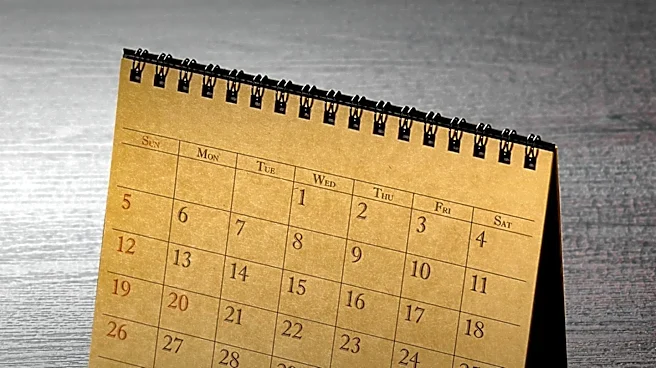
The August 2026 calendar indicates that there will be no federal holidays observed during the month, resulting in 21 US work days. The month begins on a Saturday, August 1st, and concludes on Monday, August 31st. The federal holiday preceding August 2026 is
Independence Day on Friday, July 3rd, 2026, while the subsequent federal holiday is Labor Day on Monday, September 7th, 2026. This means that all weekdays in August 2026 are designated as standard working days, impacting scheduling for businesses and government operations across the United States.
Why It's Important?
The absence of federal holidays in August 2026 has significant implications for the U.S. economy and workforce productivity. With 21 full workdays, businesses and government agencies can maintain uninterrupted operations throughout the month, potentially leading to higher output and efficiency compared to months with multiple holidays. This extended period of continuous work can be beneficial for project timelines, manufacturing schedules, and service delivery. For employees, it means a full month of work without federal holiday breaks, which might influence personal vacation planning and work-life balance considerations. The clear delineation of workdays is crucial for payroll, scheduling, and resource allocation for employers nationwide.
What's Next?
Businesses and organizations will proceed with their standard operational planning for August 2026, taking into account the full schedule of 21 workdays. This includes staffing, production targets, and service delivery models. Individuals will also adjust their personal and professional schedules accordingly, particularly those who typically rely on federal holidays for extended breaks. The focus will shift to the next federal holiday, Labor Day, in early September, which will mark a return to a holiday-interrupted work schedule. The consistent availability of calendar information allows for proactive planning and minimizes unexpected disruptions.
Beyond the Headlines
The structure of federal holidays throughout the year reflects a balance between honoring national observances and maintaining economic productivity. August, often a peak vacation month for many, typically lacks federal holidays, which can influence travel patterns and consumer spending. Without a mid-month federal break, there might be a slight shift in how people plan their summer vacations, potentially concentrating them around the Independence Day or Labor Day weekends. This pattern also highlights the economic rhythm of the U.S., where certain months are designed for maximum continuous output, while others incorporate breaks for national commemoration and rest. The predictability of these schedules is a cornerstone of national economic planning.