
What's Happening?
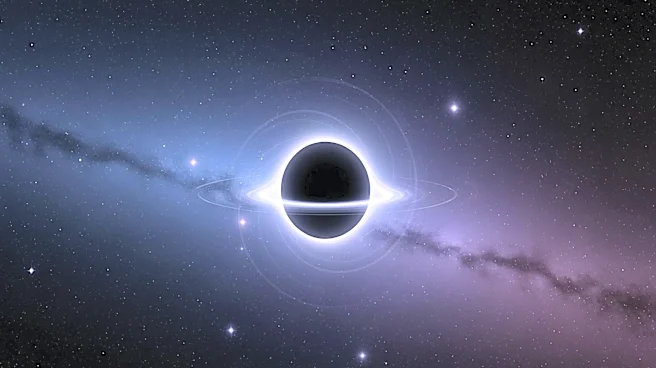
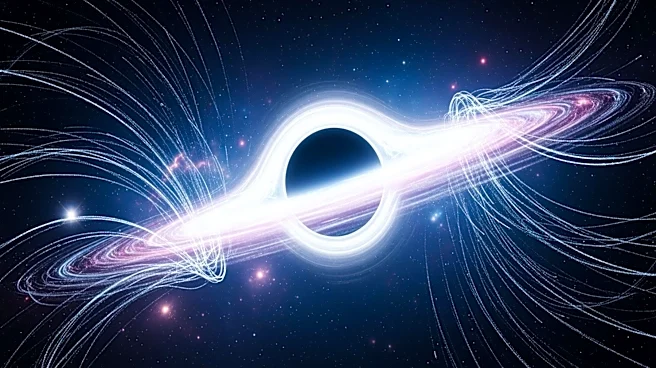
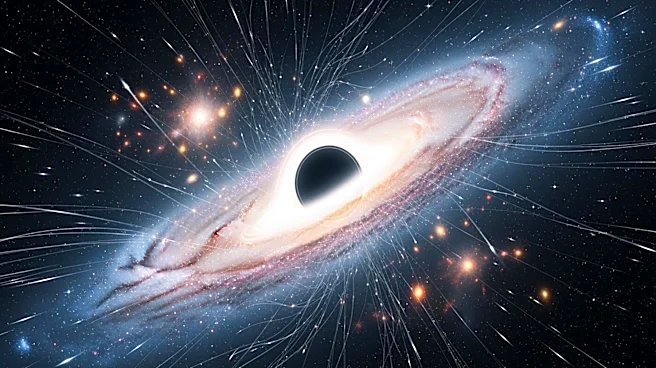
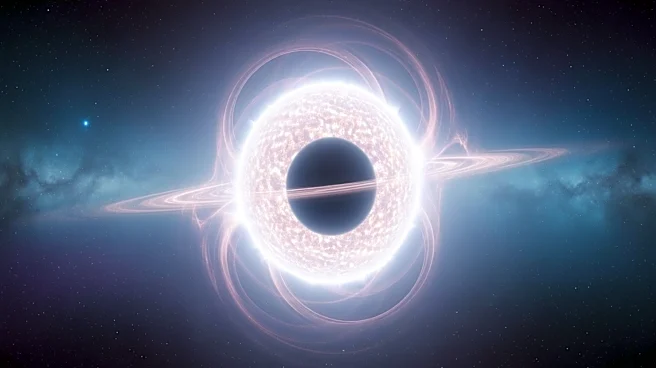
Recent research has explored the potential outcomes for stars that capture primordial black holes (PBHs), which are theorized to have formed in the early universe. The study, led by Ore Gottlieb from MIT,
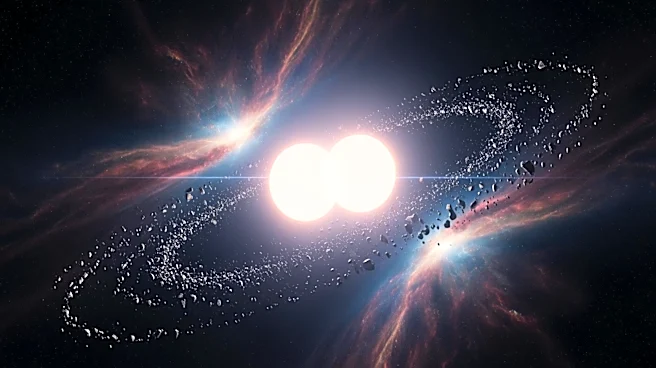
examines how these black holes, if captured by stars, could either rapidly destroy the star or gradually consume it. The research suggests that PBHs could be a component of dark matter and that their interactions with stars could provide insights into their properties. The study uses models of stellar evolution and simulations to understand the dynamics of PBH capture and its effects on stars.
Why It's Important?
Understanding the interaction between stars and primordial black holes could provide valuable insights into the nature of dark matter and the evolution of the universe. If PBHs are a significant component of dark matter, their interactions with stars could help scientists identify their presence and properties. This research also contributes to the broader understanding of stellar evolution and the potential for PBHs to influence cosmic structures. The findings could have implications for astrophysics and cosmology, offering new avenues for exploring the fundamental components of the universe.
Beyond the Headlines
The study of primordial black holes and their interactions with stars raises questions about the nature of dark matter and the early universe. The potential for PBHs to be a component of dark matter challenges existing theories and could lead to new models of cosmic evolution. The research also highlights the importance of advanced simulations and theoretical models in exploring complex astrophysical phenomena. As scientists continue to investigate these interactions, the findings could reshape our understanding of the universe's fundamental building blocks.