






What's Happening?
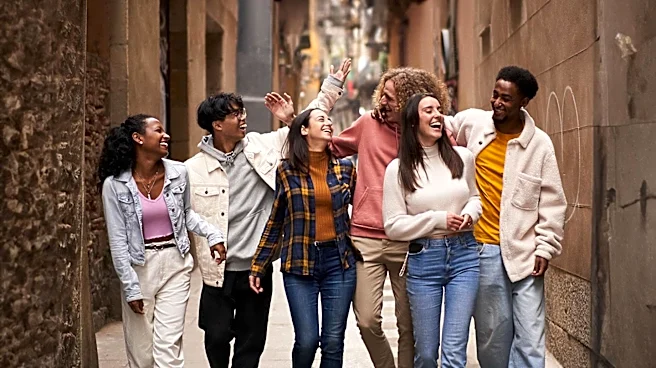
U.S. high school students are participating in various exchange programs across Europe, focusing on cultural and language immersion. Organizations like Ayusa and Greenheart Travel facilitate these programs, primarily in Germany, where students live with
host families and attend local high schools. These initiatives prioritize learning the language and culture through daily life experiences rather than a strict academic curriculum. The programs offer different durations, including trimesters, semesters, or full academic years, and often involve host family placements based on shared interests. Some programs, like the Congress-Bundestag Youth Exchange (CBYX), are fully funded by the U.S. Congress and the German Bundestag, allowing students to spend an entire academic year in Germany at no cost. Other organizations, such as AFS-USA and Youth For Understanding (YFU), also provide extensive European exchange opportunities with varying costs and scholarship options. These programs aim to provide early exposure to different cultures and academic systems, fostering personal growth and adaptability in unfamiliar environments.
Why It's Important?
These cultural immersion programs are crucial for U.S. high school students as they offer a unique opportunity for personal development and global understanding. By living with host families and attending local schools, students gain firsthand experience of different educational systems, social norms, and daily routines. This direct engagement helps them develop language proficiency, cross-cultural communication skills, and a broader perspective on global issues. The programs contribute to fostering a more globally aware and adaptable generation of U.S. citizens, which is vital in an increasingly interconnected world. Furthermore, for students considering future international studies or careers, early exposure to diverse cultures can provide a significant advantage. The emphasis on immersion over traditional classroom learning allows for a deeper understanding and appreciation of the host country's heritage, promoting empathy and reducing cultural biases. The availability of fully funded programs also ensures that these enriching experiences are accessible to a wider range of students, regardless of their socioeconomic background.
What's Next?
The continued success and expansion of these exchange programs are anticipated, with organizations likely to explore new destinations and program structures to meet evolving student interests. There may be an increased focus on integrating service-learning projects and volunteer opportunities within host communities, as seen with Greenheart Travel, to further enhance the immersion experience and allow students to contribute meaningfully. As global interconnectedness grows, the demand for such programs is expected to rise, potentially leading to more scholarship opportunities and diverse program offerings. Educational institutions and government bodies in the U.S. may also continue to recognize the value of these experiences, potentially incorporating them more formally into academic pathways or offering incentives for participation. The long-term impact will likely be a generation of U.S. citizens who are more comfortable with cultural differences, adept at navigating international environments, and better prepared for global challenges.
Beyond the Headlines
Beyond the immediate benefits of language acquisition and cultural understanding, these immersion programs cultivate a profound sense of independence and resilience in young U.S. participants. Students are often pushed outside their comfort zones, learning to problem-solve, adapt to new situations, and build relationships in unfamiliar settings. This fosters a deeper self-awareness and confidence that extends far beyond their time abroad. Ethically, these programs promote global citizenship by encouraging students to see themselves as part of a larger international community, fostering a sense of responsibility towards global issues. The experience can also challenge preconceived notions and stereotypes, leading to a more nuanced and empathetic worldview. Culturally, these exchanges contribute to soft diplomacy, building bridges between the U.S. and host nations through personal connections and shared experiences, which can have long-lasting positive effects on international relations.