





What's Happening?
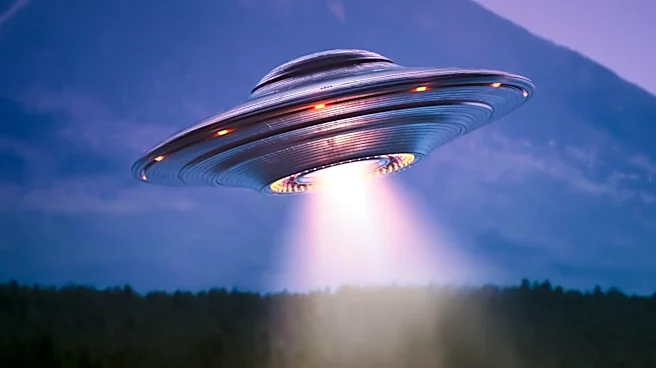
A large, jellyfish-shaped Unidentified Flying Object (UFO) was reportedly filmed hovering near a U.S. military base in Alaska before disappearing within three minutes. The incident occurred on June 15, around 10:13 PM local time. Sara Jane Osborn, an American
citizen, captured the object unexpectedly while filming a rainbow. She described the dark object as vaguely resembling a jellyfish, with independently moving 'branches' hanging downwards, and noted that it rotated from side to side. The Daily Mail, citing Osborn's testimony, reported that the alleged appearance location was near the Joint Base Elmendorf-Richardson. The nature of the object and the reasons for its sudden disappearance remain unexplained. Alaska, due to its strategic location near the Bering Strait, is a critical observation post for air and space forces and has a history of UFO sightings.
Why It's Important?
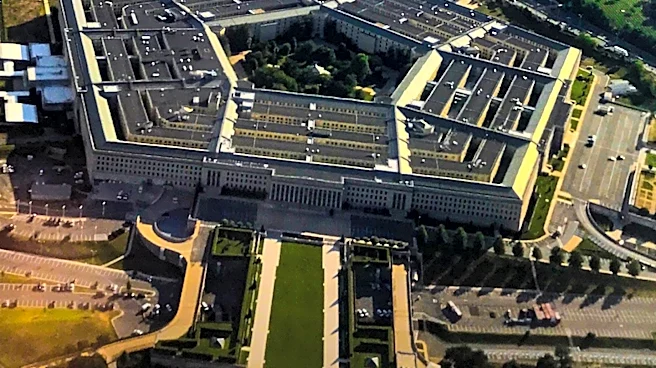
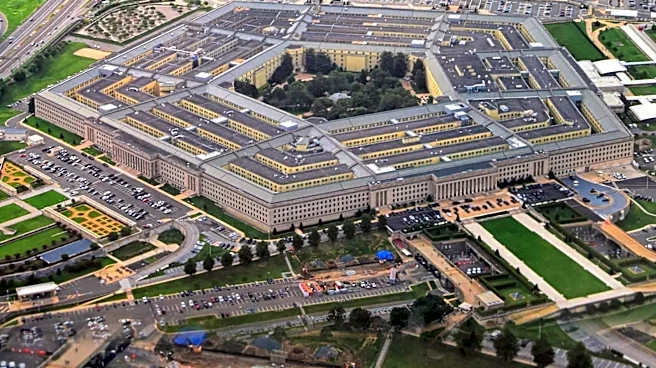
This sighting, if corroborated, adds to the growing number of Unidentified Aerial Phenomena (UAP) reports near sensitive military installations, raising national security concerns. The presence of an unexplained object near a U.S. base in a strategically vital region like Alaska could indicate potential surveillance by foreign adversaries or unknown entities. Such incidents prompt questions about the effectiveness of existing air defense systems and the ability to identify and track unconventional aerial threats. The U.S. government, through programs like the Pentagon's UAP initiative, has acknowledged the need to investigate these phenomena seriously due to their potential implications for national security and aviation safety. The lack of immediate explanation for such events underscores a gap in understanding and potentially in defensive capabilities.
What's Next?
The U.S. military and intelligence agencies may initiate an investigation into this specific incident, though official confirmation of such an inquiry is often not publicly disclosed. Investigators would typically seek additional witnesses, radar data, and any other technical recordings from the military base that might shed light on the event. The incident could contribute to ongoing UAP studies by the Pentagon, potentially leading to further data collection and analysis. Public pressure for transparency regarding UAP sightings, especially those near military zones, may increase, prompting authorities to release more information if deemed appropriate and not detrimental to national security. The event also serves as a reminder for military personnel and civilians in such areas to report unusual aerial observations.
Beyond the Headlines
The recurring nature of UAP sightings in Alaska, dating back to the 1950s, suggests a persistent pattern that warrants deeper scientific and defense analysis. The region's unique atmospheric conditions, including auroras, can sometimes explain unusual visual phenomena, but the description of a structured, independently moving object like the 'jellyfish' challenges simple meteorological explanations. This incident fuels the broader debate about the origins of UAPs—whether they represent advanced foreign technology, unknown natural phenomena, or something else entirely. The military's cautious approach to these sightings, balancing national security imperatives with public curiosity, highlights the complexity of the issue. The lack of immediate, definitive answers often leads to speculation, underscoring the need for rigorous, transparent investigation to maintain public trust and address potential threats effectively.