




What's Happening?
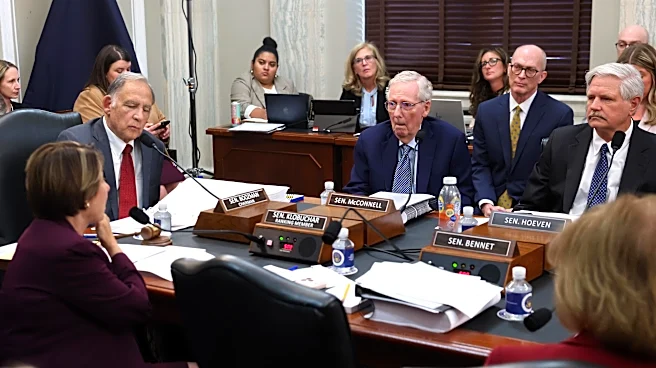
The Akwesasne Mohawk Land Claim bill has advanced through the U.S. Senate Committee on Indian Affairs and will now be reported to the full Senate for consideration. This legislation, initially introduced in the House as HR 2916 by Representative Elise
Stefanik and passed on December 9, 2025, was subsequently introduced in the Senate as S.3472 by Senator Kristin Gillibrand on December 15, 2025, with bipartisan support. The Saint Regis Mohawk Tribal Council provided additional information to the Senate Committee on Indian Affairs in June 2026, leading to the bill's approval by the committee on November 18, 2026. If the full Senate approves the bill, it will then move to the President of the United States for final approval.
Why It's Important?
The advancement of the Akwesasne Mohawk Land Claim bill is a significant development for the Saint Regis Mohawk Tribe and has broader implications for Native American land rights and federal-tribal relations in the U.S. This legislation aims to authorize, ratify, and confirm the land claim, providing a lasting resolution for the Mohawk people. For the Tribe, securing final approval would mean the resolution of a long-standing issue, potentially leading to economic development opportunities, enhanced self-governance, and the preservation of cultural heritage. The bipartisan support for the bill underscores a growing recognition of the importance of addressing historical injustices and upholding treaty obligations. Its passage would set a precedent for how similar land claims might be handled in the future, impacting other Native American communities seeking resolution for their ancestral lands.
What's Next?
Following its approval by the Senate Committee on Indian Affairs, the Akwesasne Mohawk Land Claim bill will now be presented to the full U.S. Senate for a vote. If the Senate passes the bill, it will then proceed to the President of the United States for final approval and signature into law. The Saint Regis Mohawk Tribal Council has expressed its focus on securing this final approval, emphasizing the long-term benefits for their community. Should the bill become law, it would mark a significant milestone in resolving the land claim, potentially leading to new agreements, land transfers, or other forms of restitution that would impact the Tribe's sovereignty, economic development, and cultural preservation efforts for generations to come.