






What's Happening?
Law enforcement agencies have increasingly adopted the Command Post Officer (CPO) role to centralize coordination during high-risk incidents such as hostage situations, active shooter events, and high-risk warrant services. The CPO is a senior tactical
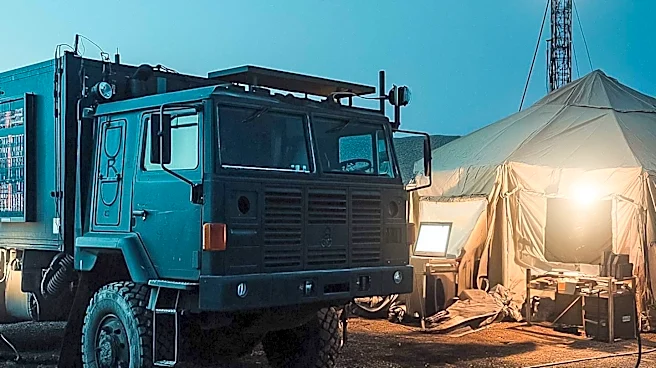
position responsible for managing the operational brain of a major incident, integrating information from multiple agencies, and directing tactical, logistical, and strategic decisions. This role emerged from the need for a unified command structure following critical incidents in the latter half of the 20th century, where fragmented responses led to confusion and loss of life. The CPO operates from a physically separate Command Post, insulating decision-makers from immediate danger and emotional intensity. Key responsibilities include establishing the Incident Action Plan, managing information flow from surveillance and external agencies like FBI hostage rescue teams, coordinating multi-agency responses, and making critical 'go/no-go' decisions on tactical actions. This structured approach aims to ensure effective resource deployment and public safety.
Why It's Important?
The establishment and formalization of the CPO role signify a critical evolution in U.S. law enforcement's approach to crisis management. By centralizing command and decision-making, the CPO mitigates the risks associated with chaotic, uncoordinated responses, which historically have led to increased casualties and operational failures. This structured approach enhances the safety of both the public and law enforcement personnel by ensuring that tactical actions are deliberate and intelligence-driven rather than impulsive. The CPO's ability to synthesize vast amounts of information and coordinate diverse agencies, including federal partners and emergency medical services, is crucial for effective incident resolution. This role directly impacts public safety by improving the efficiency and effectiveness of responses to complex threats, ultimately aiming to minimize harm and restore order more rapidly during critical incidents.
What's Next?
The continued integration and refinement of the CPO role are expected across U.S. law enforcement agencies. This will likely involve further specialized training programs, such as those offered by the FBI National Academy, to develop officers with the necessary situational awareness, decisiveness, communication skills, and legal acumen. Agencies will continue to invest in technology to support Command Posts, including advanced communication systems and real-time video feeds, to enhance the CPO's ability to manage information flow. There may also be ongoing discussions and adaptations regarding the balance between centralized command and tactical autonomy on the ground, as well as addressing criticisms concerning the potential for 'militarization' of police responses. The principles of the CPO role are likely to be applied to an even broader range of scenarios, ensuring a consistent and coordinated response to evolving threats.
Beyond the Headlines
The CPO role reflects a broader shift in law enforcement philosophy from reactive policing to proactive, strategic crisis management. This institutional change emphasizes intellect, patience, and a heavy burden of responsibility, moving away from reliance on individual heroism towards a system-based approach. While enhancing operational effectiveness, the role also brings ethical and public perception challenges. The physical and psychological distance of the CPO from the incident scene can sometimes create a disconnect with ground realities, necessitating robust communication protocols. Furthermore, the visibility of command posts and tactical gear can contribute to public concerns about police militarization, prompting ongoing debates about the appropriate use of such structures in various scenarios. The long-term implication is a more professionalized and standardized response to critical incidents, but also a need for continuous evaluation to ensure accountability and maintain public trust.