
What's Happening?
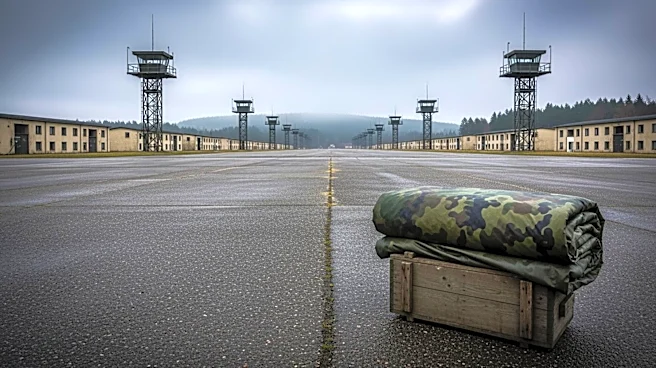
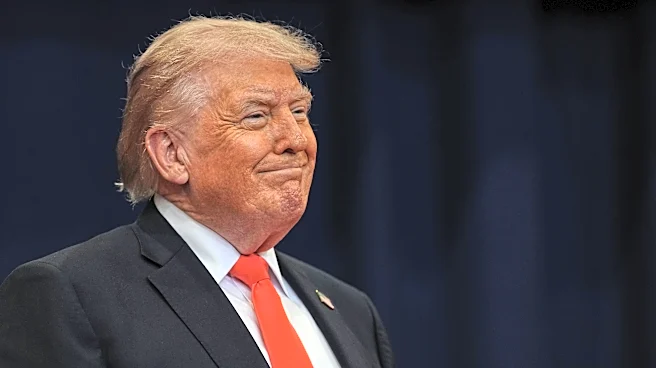
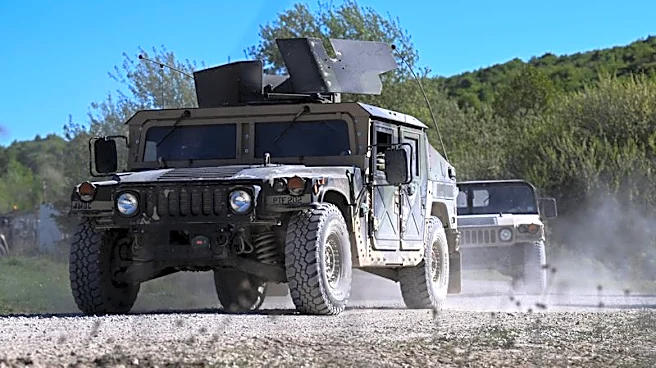
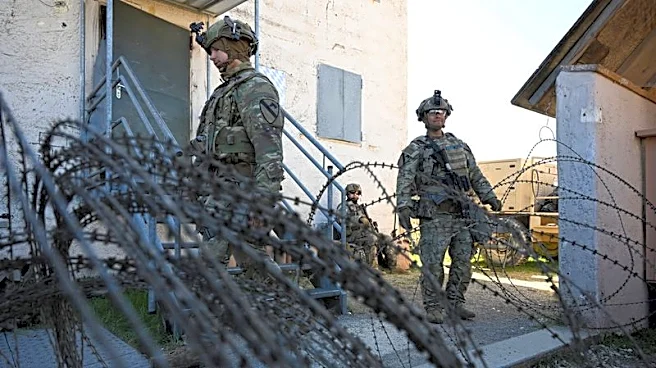
President Trump has announced plans to significantly reduce the number of U.S. troops stationed in Germany, a move that has drawn attention to America's military role in Europe. Currently, there are between
80,000 to 100,000 U.S. troops on the continent, with over 36,000 in Germany alone. The Pentagon has stated that 5,000 troops will be withdrawn, with President Trump indicating that further reductions could follow. This decision marks a departure from the longstanding bipartisan consensus on maintaining a strong U.S. military presence in Europe, which has been a key element of NATO's strategy since World War II and the Cold War. The U.S. military presence in Europe not only serves as a deterrent to Russian aggression but also supports operations in Africa and the Middle East. The announcement has sparked concerns among NATO allies, particularly in light of ongoing tensions with Russia.
Why It's Important?
The reduction of U.S. troops in Germany could have significant implications for NATO's defense posture and the security dynamics in Europe. The U.S. military presence has been a cornerstone of NATO's deterrence strategy against Russia, and a drawdown could embolden Russian President Vladimir Putin amid the ongoing conflict in Ukraine. Additionally, the move may signal a shift in U.S. foreign policy priorities, with a greater emphasis on domestic defense and deterring China. European allies, particularly Germany, may need to increase their defense spending and capabilities to compensate for the reduced U.S. presence. This could lead to a reevaluation of NATO's strategic objectives and the distribution of military resources across the continent.
What's Next?
In response to the planned troop reductions, there may be calls within NATO to redistribute forces to Eastern European countries that are more directly threatened by Russian aggression. U.S. lawmakers have already expressed concerns about the potential impact on NATO's deterrence capabilities and have suggested relocating troops to Eastern Europe rather than withdrawing them entirely. Germany and other European nations may accelerate their efforts to enhance their military capabilities and increase defense spending. The situation could also prompt further discussions within NATO about the alliance's future role and the need for greater European self-reliance in defense matters.
Beyond the Headlines
The decision to reduce U.S. troops in Germany highlights broader geopolitical shifts and the evolving nature of international alliances. It underscores the importance of burden-sharing within NATO and the need for European countries to take on more responsibility for their own security. The move also reflects changing U.S. strategic priorities, with a focus on addressing emerging threats from China and other global challenges. This development could lead to a rethinking of transatlantic relations and the role of the U.S. in global security frameworks.