
What's Happening?
The U.S. conducted a significant military operation in Venezuela, known as Operation Absolute Resolve, involving over 150 aircraft. The mission targeted communications infrastructure and military sites,
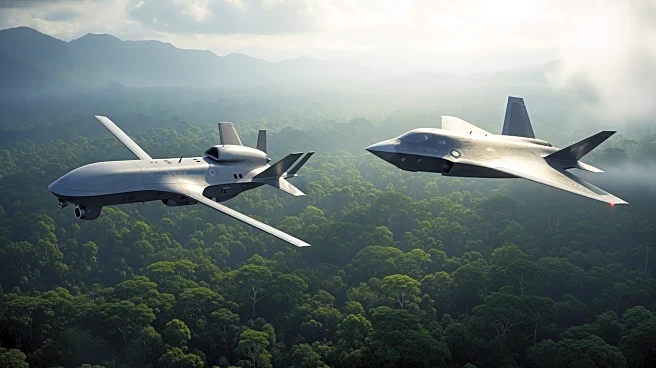
leading to the arrest of Venezuelan President Nicolás Maduro and his wife. The operation featured advanced aerial systems, including F-22s, F-35s, and B-1 bombers, supported by drones and electronic warfare aircraft. The U.S. Space Command and Cyber Command played roles in disrupting Venezuelan communications. The operation marks the first use of kamikaze drones by the U.S., indicating a shift in military strategy under the second Trump administration.
Why It's Important?
This operation highlights the U.S.'s strategic military capabilities and its willingness to use advanced technology in international conflicts. The use of kamikaze drones represents a significant shift in U.S. military tactics, aligning with trends seen in other global conflicts. The operation underscores the U.S.'s commitment to addressing security threats in the Western Hemisphere, particularly concerning drug trafficking and regional stability. The arrest of Maduro could have far-reaching implications for Venezuela's political landscape and U.S.-Venezuela relations.
What's Next?
The aftermath of the operation will likely involve diplomatic discussions and potential shifts in U.S. foreign policy towards Venezuela. The international community will watch closely for reactions from Venezuela's allies and the impact on regional stability. The U.S. may continue to leverage its advanced military technology in future operations, influencing global military strategies. The situation could lead to increased tensions between the U.S. and countries supporting Maduro, affecting international relations.