

What's Happening?
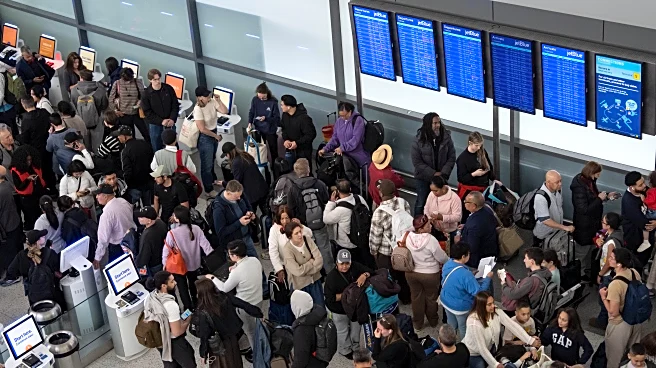
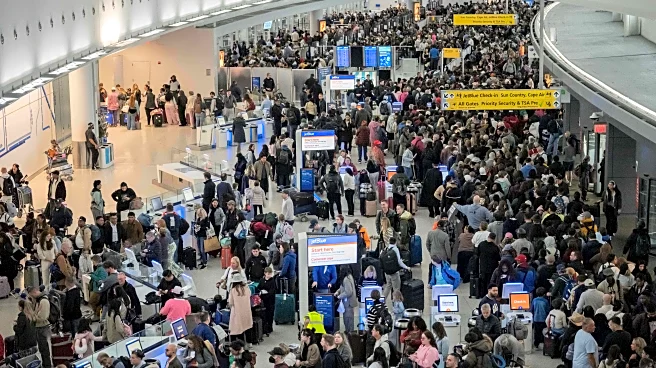
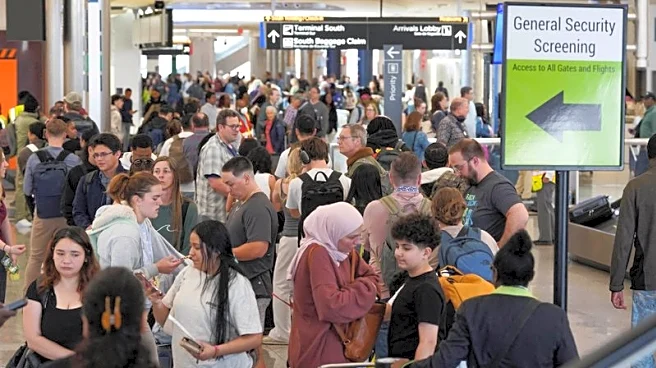
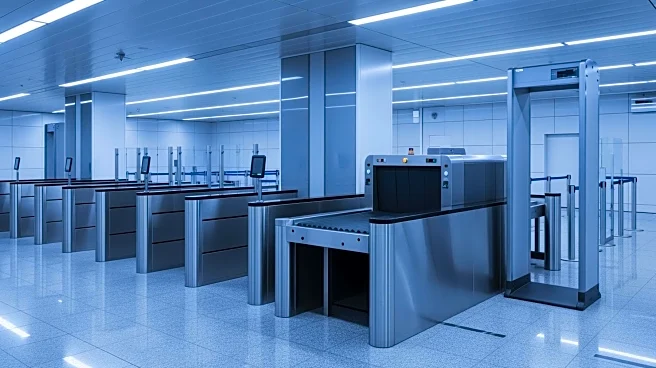
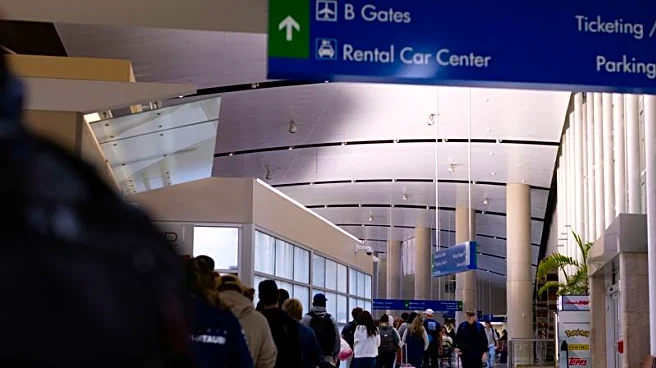
During the ongoing partial government shutdown, major U.S. airports are experiencing significant disruptions due to long security lines and staffing shortages. However, a select group of airports is largely unaffected by these issues because they utilize
private screening contractors instead of federally employed TSA officers. The Transportation Security Administration’s Screening Partnership Program (SPP), established in 2004, allows private companies to conduct security screenings under TSA oversight. Airports participating in this program, such as San Francisco International Airport and Kansas City International Airport, report fewer disruptions as their private screeners are paid through pre-funded federal contracts, unlike TSA workers who are impacted by the shutdown. This model is gaining attention as a potential solution to avoid future shutdown-related disruptions.
Why It's Important?
The reliance on private screening contractors during government shutdowns highlights a significant shift in airport security management. This approach not only ensures continuity of operations during funding impasses but also raises questions about the future of federal employment in airport security. While private screening can be more efficient and cost-effective, critics argue that it may compromise safety and accountability, as security is traditionally a government function. The ongoing situation underscores the need for a sustainable solution to prevent disruptions in critical services like airport security, which affects millions of travelers and the broader travel industry.
What's Next?
As the government shutdown continues, more airports may consider transitioning to private screening to mitigate operational disruptions. This could lead to a broader debate on the privatization of airport security and its implications for safety and worker rights. Additionally, the situation may prompt legislative action to address the vulnerabilities exposed by the shutdown, potentially leading to reforms in how airport security is managed and funded. Stakeholders, including labor groups and government officials, will likely engage in discussions to balance efficiency with security and accountability.
Beyond the Headlines
The shift towards private screening at airports could have long-term implications for the workforce and security standards. While private contractors offer stability during shutdowns, the potential for reduced oversight and accountability raises concerns about the quality of security provided. This development also reflects broader trends in privatization within public services, prompting discussions about the role of government versus private entities in ensuring public safety. The ongoing situation may influence future policy decisions regarding the management of critical infrastructure and services.