
What's Happening?
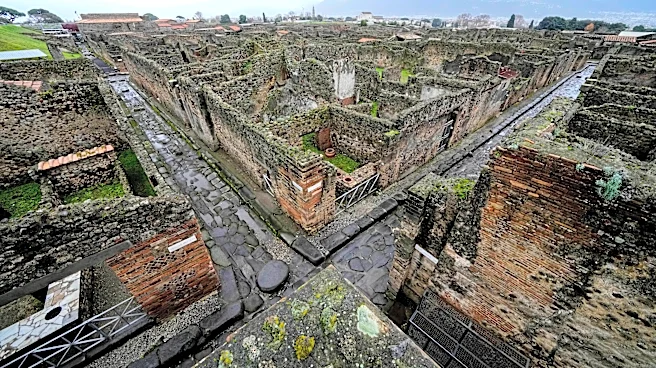
Archaeologists at the ancient Roman site of Pompeii have utilized artificial intelligence to digitally reconstruct the face of a victim from the AD 79 eruption of Mount Vesuvius. This marks the first time
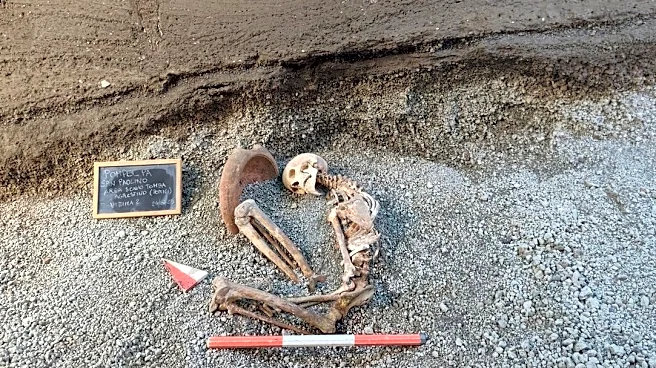
AI has been used in such a manner at Pompeii, providing a new perspective on one of history's most famous natural disasters. The digital portrait represents an older man who was among two victims discovered as they attempted to flee the city. The reconstruction was developed by the Pompeii Archaeological Park in collaboration with the University of Padua, based on archaeological survey data from excavations near the Porta Stabia necropolis.
Why It's Important?
The use of AI in archaeology represents a significant advancement in the field, offering new methods to analyze and interpret historical data. This development not only enhances our understanding of the past but also makes archaeological research more accessible and engaging to the public. The project underscores the potential of AI to revolutionize classical studies by providing detailed reconstructions that were previously impossible. This could lead to renewed interest and investment in archaeological research, as well as inspire similar projects at other historical sites.
Beyond the Headlines
The integration of AI in archaeology raises questions about the ethical implications of using technology to recreate human likenesses from the past. While it offers a more vivid connection to history, it also challenges traditional methods of archaeological interpretation. The project highlights the balance between technological innovation and the preservation of historical integrity. As AI continues to evolve, its role in fields like archaeology will likely expand, prompting ongoing discussions about its applications and limitations.