






What's Happening?
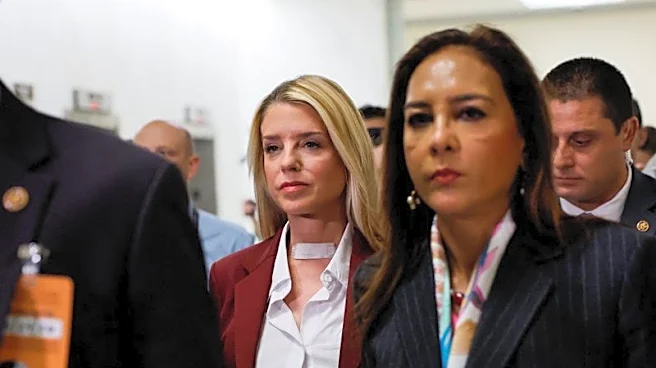
Former Attorney General Pam Bondi testified before the House Oversight Committee regarding her handling of the release of files related to Jeffrey Epstein. Democrats criticized the session, labeling it a 'sham' and a 'coverup,' as Bondi reportedly refused
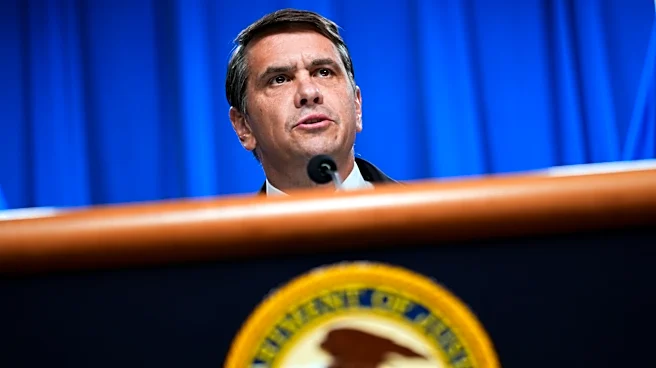
to answer several questions about President Trump. The session was closed-door, and Bondi was accompanied by Department of Justice attorneys, including Assistant Attorney General Harmeet Dhillon, who allegedly intervened to prevent certain questions from being answered. The committee plans to release a transcript of the interview, which was not recorded on video. Bondi was subpoenaed in March but only agreed to a voluntary interview after Democrats sought to hold her in contempt. During the session, Bondi reportedly blamed Acting Attorney General Todd Blanche for issues with the file release, a claim she later disputed on social media.
Why It's Important?
The handling of the Epstein files is significant due to the high-profile nature of the case and the public's demand for transparency. The files contain sensitive information about Epstein's alleged crimes and his connections with influential figures. The criticism from Democrats highlights ongoing concerns about the transparency and accountability of the Trump administration's handling of the case. The involvement of the Department of Justice in limiting the scope of Bondi's testimony raises questions about potential political interference. This situation underscores the broader issue of how sensitive legal matters are managed by government officials and the potential implications for public trust in the justice system.
What's Next?
The House Oversight Committee intends to continue its investigation by seeking testimony from other key figures, including Acting Attorney General Todd Blanche and FBI Director Kash Patel. The release of the interview transcript may provide further insights into the proceedings and Bondi's role in the file release. The ongoing scrutiny could lead to additional legislative or legal actions aimed at ensuring greater transparency in similar cases. The outcome of these efforts may influence future policies regarding the handling of sensitive legal documents and the accountability of public officials.