



What's Happening?
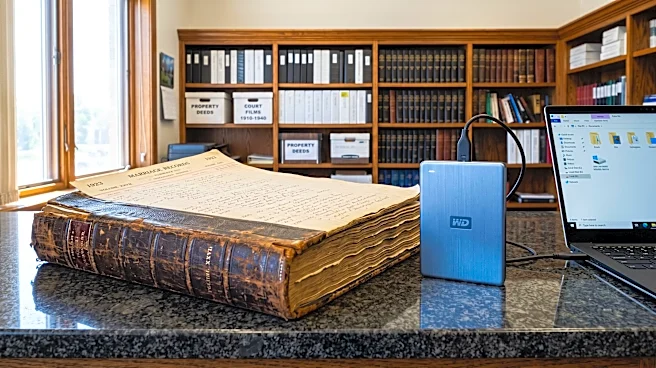
A federal grand jury has indicted West Virginia State Auditor Mark A. Hunt on charges related to a scheme to steal multiple properties through the improper issuance of tax deeds. The indictment, announced by United States Attorney Moore Capito, alleges
that Hunt, 66, of Charleston, was aided by three other individuals: David Keith Cole, 57, deputy chief of staff for the state auditor’s office and manager of Hunt’s private law firm; Frederic Scott Caudill, 59, general counsel for the West Virginia State Auditor’s Office; and Robert Lisle Johns, 66, a longtime friend, business associate, and special counsel at the state auditor’s office. Each defendant faces nine counts of theft of property. Additionally, Caudill and Cole are each charged with one count of making materially false statements to federal investigators. The grand jury also indicted Hunt, Cole, and Marie Ann Hoffmann, an employee of the state auditor’s office, for bank fraud. These charges allege that Hoffmann, 66, of Hurricane, submitted falsified government timecards to include hours worked at Hunt’s private law firm, receiving state wages for work not performed for the state auditor’s office, with Hunt’s knowledge and Cole’s approval.
Why It's Important?
This indictment is significant as it involves high-ranking public officials in West Virginia, including the State Auditor, facing serious charges of corruption and fraud. The alleged scheme to steal properties through improper tax deed issuance undermines public trust in government processes and the integrity of property ownership. The involvement of multiple officials, from the auditor to his deputy chief of staff and general counsel, suggests a systemic issue within the state auditor's office. The bank fraud charges against an employee for falsifying timecards further highlight potential misuse of public funds and resources. Such allegations can erode public confidence in government institutions and may lead to increased scrutiny of financial oversight and ethical conduct within state agencies. The case underscores the importance of accountability for public officials and the legal consequences of abusing their positions for personal gain.
What's Next?
The indicted individuals, including State Auditor Mark A. Hunt, are presumed innocent until proven guilty in a court of law. The legal process will involve court proceedings where the defendants will have the opportunity to enter pleas and present their defense. The prosecution, led by Assistant United States Attorneys Jonathan T. Storage and Joshua Hanks, will present evidence gathered by the Federal Bureau of Investigation (FBI) and the West Virginia Commission on Special Investigations. The outcome of these proceedings could result in convictions, leading to penalties such as imprisonment and fines, or acquittals. Regardless of the verdict, the case is likely to trigger internal reviews and reforms within the West Virginia State Auditor’s Office regarding property deed issuance processes, employee timekeeping, and ethical guidelines for public servants. Public and media attention will likely remain focused on the trial as it progresses, given the high-profile nature of the defendants.
Beyond the Headlines
The allegations against State Auditor Mark A. Hunt and his associates extend beyond individual acts of corruption, touching upon broader issues of governance and public trust. The alleged manipulation of tax deed processes could have far-reaching implications for property owners and the real estate market in West Virginia, potentially creating uncertainty and legal challenges for past property transactions. The case also raises questions about the oversight mechanisms in place to prevent such abuses of power within state government. The involvement of multiple individuals in the alleged schemes suggests a culture where such activities might have been facilitated or overlooked. This situation could prompt legislative action to strengthen ethics laws, enhance whistleblower protections, and improve internal controls within state agencies to prevent similar incidents in the future. The long-term impact could be a renewed focus on transparency and accountability in West Virginia's public sector.