

What's Happening?
Debbie Dingell, a U.S. Representative from Michigan, has been a long-time advocate for reforming the presidential primary process. She, along with former Michigan Republican Party chairman Saul Anuzis, proposed a bipartisan solution to implement rotating
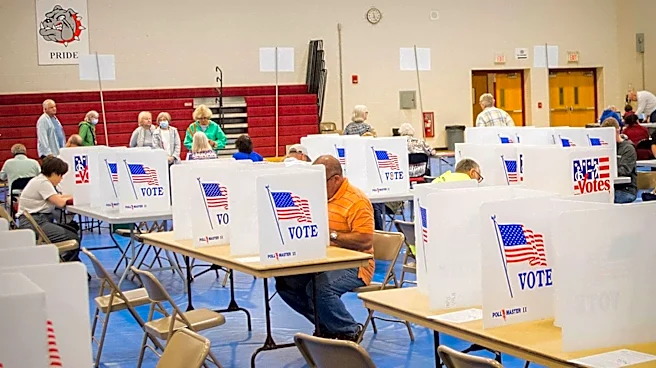
regional primaries determined by lottery. This proposal aims to dismantle the longstanding dominance of Iowa and New Hampshire in the presidential nominating process. The Democratic National Committee (DNC) has recently taken steps to address this issue by proposing a new primary calendar for 2028, which still requires approval from the full DNC. The proposal faces legal and political challenges but represents a willingness to debate the entrenched system. The Republican National Committee (RNC), however, has not shown similar initiative, maintaining the status quo that allows Iowa and New Hampshire to hold significant influence over the nominating process.
Why It's Important?
The reform of the primary process is significant as it could democratize the presidential nominating system, allowing every state a fair chance to influence the selection of candidates. The current system gives undue advantage to Iowa and New Hampshire, which not only affects political dynamics but also has economic implications. Early primaries bring substantial economic activity to these states through campaign spending on advertising, local services, and more. By rotating the primaries, other states could benefit economically and politically, fostering a more inclusive and representative electoral process. This change could also reduce the influence of a few states over national politics, potentially leading to a more balanced and equitable system.
What's Next?
The DNC's proposed changes for the 2028 primary calendar are still in the approval phase and face potential legal challenges. If approved, the new system could be implemented, but it would require cooperation from state parties and possibly adjustments to state election laws. The RNC's stance remains unchanged, but pressure from within the party and from other states could lead to future discussions on reform. The outcome of these efforts could set a precedent for how presidential primaries are conducted in the future, potentially leading to broader electoral reforms.