



What's Happening?
The United Nations-backed global hunger monitor, the IPC, issued an alert on October 12, indicating a growing risk of famine in several conflict-affected areas of Sudan. This escalation is primarily attributed to the compounding effects of El Niño-induced
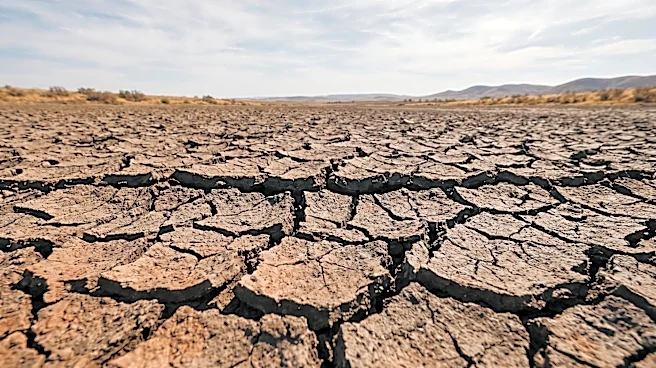
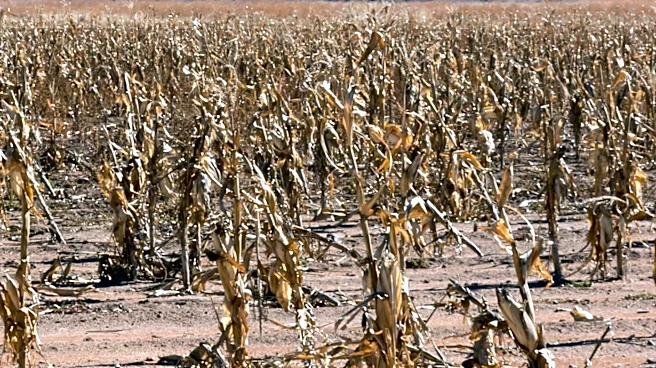
drought on already dire conditions. Farmers across Sudan, who have been struggling with crop harvests since a civil war erupted in 2023, are now facing severe drought. Data from the United States Geological Survey (USGS) shows that rainfall from July to September, the peak rainy season, was the lowest in over three decades across the country. Specifically, North Darfur experienced its lowest rainfall since 1984, North Kordofan since 1990, and Gedaref since 1991. The UN World Food Programme (WFP) forecasts an additional 350,000 people will face severe hunger by the end of 2026, potentially rising to 1.2 million more by August 2027. The worst-hit regions are Darfur and the Kordofan area.
Why It's Important?
The escalating famine risk in Sudan carries significant humanitarian and geopolitical implications. A widespread famine could lead to mass displacement, increased mortality rates, and further destabilization of an already war-torn nation. The confluence of conflict and climate change-induced drought creates a complex emergency, making humanitarian aid delivery exceptionally challenging. The WFP's struggle to secure adequate funding—with only $276 million for its Sudan operation, less than half of last year's budget—highlights a critical shortfall in international support. This situation could exacerbate regional migration crises and place additional strain on neighboring countries. The decline in both aid and harvests, as described by Carl Skau, acting executive director of the WFP, as a 'recipe for disaster,' underscores the urgent need for increased international attention and resources to prevent a catastrophic humanitarian crisis.
What's Next?
The immediate focus will be on increasing humanitarian aid and securing additional funding to address the severe hunger crisis. The WFP requires an extra $134 million to combat the drought-induced hunger. Efforts will likely concentrate on delivering food to the most vulnerable populations, particularly in Darfur and the Kordofan region, where conditions are most severe. However, the ongoing conflict and limited access will continue to pose significant challenges to aid distribution. International organizations and donor countries will need to coordinate to provide both immediate relief and long-term solutions, including climate adaptation strategies for agriculture. The situation also calls for diplomatic efforts to de-escalate the conflict in Sudan, which is a primary driver of the humanitarian crisis.
Beyond the Headlines
The situation in Sudan exemplifies the complex interplay between climate change, conflict, and food security. The El Niño phenomenon, a natural climate pattern, is intensifying the drought, demonstrating how global climate shifts can have devastating local impacts, particularly in vulnerable regions. The conflict, however, remains a critical man-made factor, disrupting agricultural cycles, displacing populations, and hindering humanitarian access. This crisis highlights the ethical imperative for the international community to address both the immediate needs of affected populations and the underlying causes of such vulnerabilities. It also underscores the need for integrated approaches that combine conflict resolution, climate resilience building, and sustainable development to prevent future famines in similar contexts.