




What's Happening?
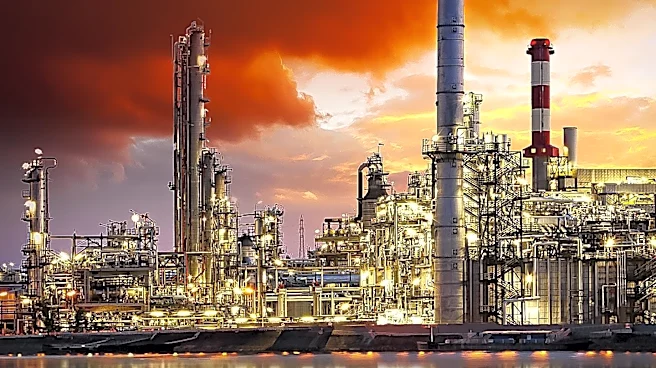
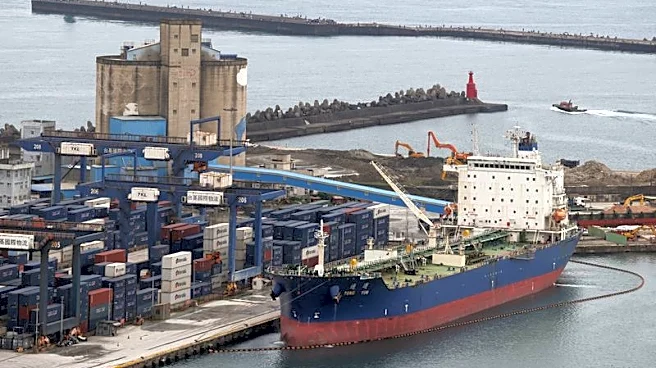
Gulf oil producers are accelerating plans to reduce their reliance on the Strait of Hormuz by developing at least seven major pipeline projects. These projects aim to reroute oil exports through the Red Sea, Gulf of Oman, and the Mediterranean, thereby
bypassing the Strait of Hormuz, a critical chokepoint that has been subject to disruptions due to regional tensions, particularly with Iran. The new routes could significantly increase the strategic importance of Africa's Red Sea coastline, involving countries like Egypt, Sudan, Eritrea, and Djibouti. According to Goldman Sachs, these projects could add 3.8 million barrels per day of bypass capacity by the end of 2027, potentially rising to 7.3 million barrels per day by 2028. This shift is driven by the need to mitigate risks associated with the Strait of Hormuz, where tensions have pushed Brent crude prices above $100 per barrel.
Why It's Important?
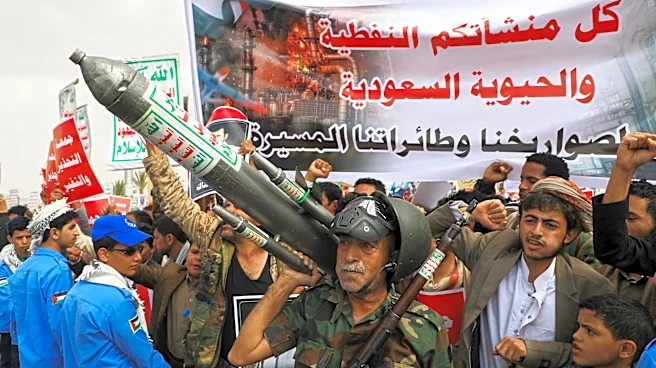
The development of alternative oil export routes is crucial for Gulf states to ensure the stability of their oil exports amid ongoing regional conflicts. By reducing dependence on the Strait of Hormuz, these countries aim to safeguard their oil supply chains from geopolitical disruptions. This strategic shift could alter global energy trade routes, placing greater importance on Africa's Red Sea corridor. However, the new routes are not without risks, as they remain vulnerable to geopolitical tensions, such as attacks by Yemen's Houthi rebels. Additionally, the alternative routes may incur higher transportation costs and logistical challenges, impacting the efficiency of oil shipments to global markets.
What's Next?
As these pipeline projects progress, Gulf states will likely continue to invest in infrastructure to enhance their oil export capabilities. The completion of these projects could lead to a significant reduction in the volume of oil passing through the Strait of Hormuz, potentially altering global oil trade dynamics. However, the geopolitical landscape remains volatile, and further developments in regional conflicts could impact the timeline and success of these projects. Stakeholders, including governments and energy companies, will need to navigate these challenges to ensure the security and efficiency of their oil exports.