


What's Happening?
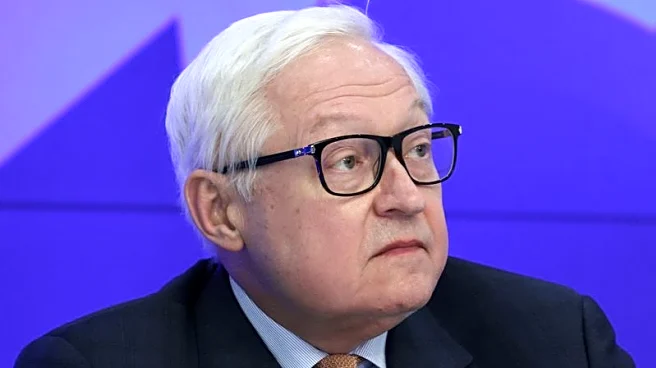
Russia has issued a stark warning to the United States following President Trump's expressed interest in acquiring Greenland. The former Russian deputy prime minister, Dmitry Rogozin, has cautioned that such a move could lead to catastrophic consequences,
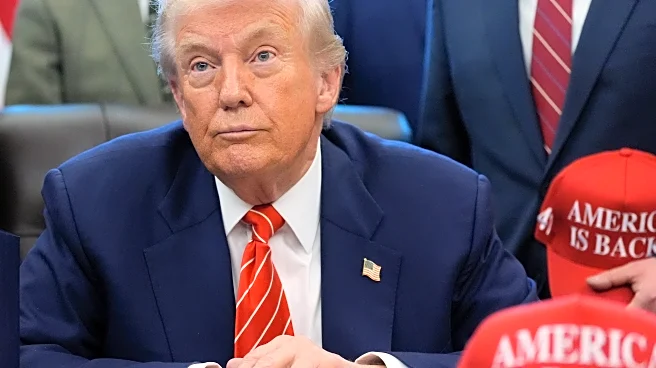
potentially marking the 'end of the world.' President Trump has been vocal about his desire to take over Greenland, a territory currently under the Kingdom of Denmark, citing national and international security reasons. He has suggested that the U.S. would defend Greenland, either 'the easy way' or 'the hard way.' This ambition has raised concerns among European nations, prompting military deployments to Greenland. Russia perceives this as a strategic move by the U.S. to gain nuclear superiority, potentially placing nuclear strike forces on the island. Rogozin, who has a background in military and space sectors, argues that this could dismantle the strategic stability that has prevented nuclear conflict since 1945.
Why It's Important?
The geopolitical implications of President Trump's interest in Greenland are significant. If the U.S. were to pursue this acquisition, it could destabilize international relations, particularly with Russia and China, who are also reportedly interested in the territory. The potential militarization of Greenland could lead to a new arms race in the Arctic, a region already sensitive due to its strategic location for missile trajectories. This development could strain U.S. relations with NATO allies, as Denmark has warned that an attack on Greenland could lead to the dissolution of NATO. The situation underscores the delicate balance of power in international politics and the potential for territorial disputes to escalate into broader conflicts.
What's Next?
The international community is likely to closely monitor the U.S.'s next steps regarding Greenland. European nations, particularly those in NATO, may increase their military presence in the region as a precautionary measure. Diplomatic efforts may intensify to address the concerns raised by Russia and to prevent any unilateral actions by the U.S. that could lead to conflict. The U.S. administration may face pressure to clarify its intentions and engage in dialogue with both allies and adversaries to mitigate the risks of escalation.