







What's Happening?
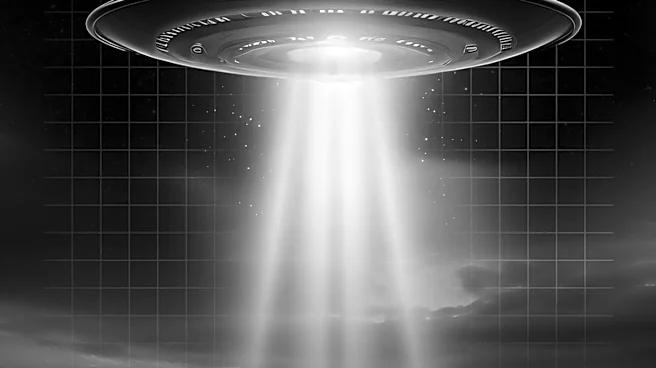
NASA's stance on unidentified flying objects (UFOs), now often referred to as unidentified anomalous phenomena (UAPs), has evolved significantly over the decades. Initially, in the 1940s and 1950s, UFO sightings were taken seriously by both the public
and the government. However, as time progressed, the topic became stigmatized, leading to reluctance among researchers and witnesses to discuss such phenomena. This shift in perception was influenced by academia and government dismissals. In recent years, however, there has been a resurgence of interest in UAPs, driven by government investigations, military disclosures, and scientific reviews. NASA has increasingly emphasized a scientific approach to studying these phenomena, launching its own independent study in 2022. This move aligns with a broader government effort to systematically examine unexplained aerial phenomena.
Why It's Important?
The renewed focus on UAPs by NASA and other government entities highlights a significant shift in how these phenomena are perceived and studied. This change is important as it reflects a broader effort to increase transparency and scientific inquiry into unexplained aerial phenomena. The involvement of NASA, a respected scientific institution, lends credibility to the study of UAPs and may encourage further research and public interest. Additionally, the government's increased oversight and requirement for intelligence assessments and regular reporting on UAPs suggest a commitment to understanding these phenomena more comprehensively. This could lead to new insights and potentially impact national security policies, scientific research, and public perception of UAPs.
What's Next?
The next phase of the U.S. government's effort to disclose information about UAPs may involve additional releases of declassified records and continued investigations by the Pentagon's All-domain Anomaly Resolution Office (AARO). There is also ongoing pressure from members of Congress for greater transparency and whistleblower testimony. NASA's role in this effort is expected to continue, with the agency applying its scientific expertise and observational capabilities to better understand anomalous reports. The public's access to information about UAPs is likely to increase, driven by advocacy groups and technological advances that make photos, videos, and firsthand accounts more accessible.
Beyond the Headlines
The evolving approach to UAPs reflects broader cultural and institutional shifts. Historically, the stigma associated with UFOs discouraged open discussion and research. However, the erosion of public trust in government and academia has led to a more open environment for discussing UAPs. This change is partly due to technological advances that have made it easier for the public to access and share information about UAP sightings. The government's shift from denial to managing the narrative suggests a strategic change in how it addresses public interest in UAPs. This could lead to a more informed public and potentially influence future policy decisions.